By Mary-Frances Winters
Adapted from: Race and Ethnicity: The Fiction and Reality Written By Mary-Frances Winters for Diversity Best Practices, 2012

When California Newsreel’s PBS three-part series, The Power of Illusion, was released in 2003 pronouncing race is a social construct with virtually no biological basis, a media storm erupted in the popular press. While the scientific community had been debating this contention for some time this series explained the research in lay terms designed for the masses to understand.
While these revelations might have quelled some of the divisive discourse about race, it actually heightened the controversy especially among those tied, for a variety of socio-political reasons, to former theories of innate differences.
As recently as an August 1, 2011 Washington Post article, Role of race reemerges in DNA-testing debate, the divergent views among geneticists, socialists, bioethicists and anthropologists were revealed.
Some argued that designations such as black, white, Asian and Hispanic are outmoded classifications with little valid meaning for understanding genetic variations. The other side opined that meaningful DNA variations can track racial lines and to not explore them might jeopardize the effectiveness of the emerging concept of personalized medicine, aimed at developing treatment based on a person’s genetic makeup.
One of the contributors to the Washington Post piece, offered, “We recognize that race is a “fuzzy concept”. “Fuzzy” as it might be, it continues to be a divisive, complex topic fraught with painful memories and daily reminders for many. And for others, race is an issue that they want to bury once and for all either because it is just too uncomfortable to talk about or they really believe that we live in a “post racial society”.
An anthropological definition that was accepted until recent years, laid out three races including Caucasoid (of European descent), Mongoloid (of Asian Descent) and Negroid (of African descent). These distinctions were primarily made on the basis of physical characteristics such as skin color, hair texture and body type.
Today, according to the U.S. Census Bureau, the definition used to classify people is based on the notion that race is not “scientific or anthropological” and takes into account “social and cultural characteristics as well as ancestry”, using “appropriate scientific methodologies” that are not “primarily biological or genetic in reference.” The race categories include both racial and national-origin groups.”
Ethnicity has been considered separate and distinct from race, defined as a group of people who share common culture (language, heritage, religion, geographic region). For example, Mexican might be considered an ethnic group and members could identify with different races within the ethnic group.
Many social scientists have replaced the word race with ethnicity to refer to self-identifying groups based on shared beliefs, culture, ancestry and history. They have shifted away from the language of race to the term populations to talk about genetic differences.
The Subtleties: Color Matters
The amount of melanin in one’s skin matters. Colorism, a practice where those with lighter skin are treated more favorably than those who are darker manifests inter- as well as intra-culturally. Behavioral scientists have conducted numerous studies globally that show both whites and blacks are more favorably disposed toward people with lighter skin, rating them smarter, wealthier, even happier. One such study showed participants 60 photos, including some pictures of the same person that were altered to make their skin look darker. Both whites and blacks gave lower scores on intelligence to people with darker skin.
In Latin and South America, light skin is seen as more attractive. In Mexico and in Brazil, light skin represents power. Darker skinned people are more likely to be discriminated against across the globe
The Emergence of Multiracialism
Multiracialism: A concept or ideology that promotes a society composed of various races, while accepting and respecting different cultural backgrounds. It is a society that consists of a diverse mix of people, whether it be relative to their ethnicity, language, culture, religion, and traditions.
Compounding the ability to clearly define racial categories is the rise of multiracialsim. For centuries, multiracial people lived on the margins of their identities, not feeling totally connected to any of them. Interculturalist Janet Bennett describes the phenomena of cultural marginality as “internal culture shock”—the conflict between two cultural voices competing for attention among oneself.”
But with a significant rise in multiple-race births in both Europe and the United States, many individuals who claim ancestry from more than one race are no longer willing to be forced into checking only one box. And their growing numbers are giving them more of a voice as they come out of the shadows societies have put them in. (Read more: Trend 6 – Who Am I? The Rise of Multiple Identities)
Implications and Recommendations for D&I Practitioners:
- Embrace the concept that race is a social construct with little genetic meaning and consider reframing race discussions using the lens of ethnicity and color. Colorism is still a significant global issue that is very seldom explored in any depth.
- Give employees “permission” to talk about race by teaching them how to talk about it in constructive ways. We have been lamenting for years that we, as a society, try to avoid discussions of race. We need courageous and culturally competent practitioners who can effectively bring the real issues to the fore, creating safe spaces for the tough discussions.
- Develop robust content to have meaningful and instructive dialogue around the global issues, including a historical perspective that frames the topic, not strictly from a U.S. Civil Rights Movement lens.
- Support employees of color with their own issues about addressing race. There are generational considerations. Baby boomers have had very different life experiences than Millennials. Tensions arise when Millennials of color declare that race is not an issue for them and boomers decry that race is an issue for everyone of color.
- Address the “they need to get over it” sentiment that is often today’s reaction to race. Just like diversity, as the umbrella subject, is ongoing and ever evolving, race as an aspect of the diversity milieu, is inextricably entwined with many socio-economic and political problems of the day. We will not alleviate these problems without facing race as the crux.
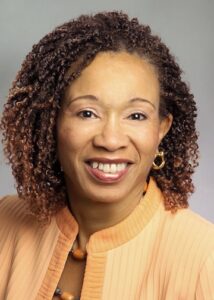
Dr. Mary-Frances Winters
Dr. Mary-Frances Winters is a leading diversity and inclusion practitioner and thought leader. She is the founder and CEO of The Winters Group, Inc., a 28 year old diversity and inclusion firm specializing in D&I assessment, education and strategic planning. Dr. Winters is the author of three books: Only Wet Babies Like Change: Workplace Wisdom for Baby Boomers; Inclusion Starts with I and CEOs Who Get It.
By Nadine Vogel
President, Springboard Consulting LLC
Essential functions job descriptions are a crucial component of HR compliance, especially useful in the mitigation of risk when it comes to the talent acquisition, management, and potential termination of individuals with disabilities. In light of recent changes made to the ADA and pending OFCCP legislation, essential functions has also become a crucial component of diversity as CDOs strive to include and properly support individuals with disabilities in their workplace.
When completed appropriately, at a minimum, this process serves as the key document to determine if applicants are qualified for a given position, when responding to ADA accommodation compliance issues, and as an added and critical component of an organization’s performance management system.
Essential functions are defined as basic job duties that an employee must be able to perform, with or without reasonable accommodation, and should be included in each job description, according to the ADA.
A job function may be considered essential for any of several reasons, including but not limited to the following:
- The reason the position exists is to perform that function;
- There are a limited number of employees available among whom the performance of that job function can be distributed; and/or
- It’s highly specialized—the incumbent in the position is hired for his or her expertise or ability to perform that particular function.
Evidence of whether a particular function is essential includes, but is not limited to:
- The employer’s judgment as to which functions are essential;
- Written job descriptions prepared before advertising or interviewing applicants for the job;
- The amount of time spent on the job performing the function;
- The consequences of not requiring the incumbent to perform the function;
- The work experience of current and past incumbents in the job.
A duty is typically considered an essential function of the position if it’s important to the company’s operation, performed with frequency, there isn’t sufficient staff to reassign it, and it can’t be redesigned or performed in another way among other criteria.
In establishing the essential functions of a company’s many position descriptions, the following must take place:
- A comprehensive review and analysis of each of the organization’s documented job descriptions.
- Individual interviews to better understand work experiences of incumbents in similar jobs.
- A comprehensive review of the company’s related policies and procedures including but not limited to an organization’s Talent Acquisition Process, it’s RAC, Reasonable Accommodations Committee, and Performance Management System.
Many readers may ask, is this really necessary? It sounds like a lot of work in the midst of many competing priorities. The quick answer is yes.

Nadine Vogel
Nadine Vogel is the CEO of Springboard Consulting LLC. Founded in 2005, Springboard is recognized as the expert in mainstreaming disability in the global workforce, workplace, and marketplace. Serving corporations and organizations throughout the U.S., Canada, Europe, and Asia, Springboard has become a trusted partner in relation to disability issues and initiatives across virtually every business category. For more information, please contact Nadine Vogel at Springboard Consulting. Nadine is also the author of Dive In: Springboard into the Profitability, Productivity, and Potential of the Special Needs Workforce.
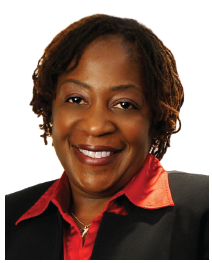
HEADQUARTERS: Naperville, Illinois
WEBSITE: www.officemax.com
BUSINESS: Office products distribution
REVENUES: $7.1 billion
EMPLOYEES: 29,000
TITLE: Senior Director Corporate Compliance and Enterprise Risk Management
EDUCATION: MS, Roosevelt University
WHAT I’M READING: Use your Brain to Change your Age, by Daniel G. Amen
INTERESTS: Travel, reading, healthy living, fashion, film, music
What lessons have you learned from business relationships?
In order to build and nurture good business relationships, you must deliberately learn as much as you can about the people and their interests, focusing more on character and personality rather than corporate status or job titles. This helps create an inclusive environment.
What are you proudest of in your life?
Successfully completing an international move which required learning English as an adult, and raising three children as a single parent while growing professionally.
Are there any organizations that you or your family has been a part of that benefited you?
My church. Its outreach program helped my family and I build and appreciate our community.
What do you think is the greatest issue or dilemma facing the African American community today?
Education. In order for African Americans to compete for jobs they need to be educated, but education is not affordable and parents who are not themselves educated do not always fully understand the opportunities that education can bring.
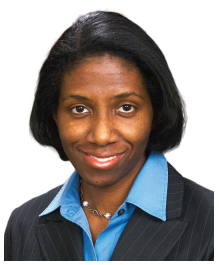
HEADQUARTERS: Atlanta, Georgia
WEBSITE: www.newellrubbermaid.com
BUSINESS: Consumer and commercial products
REVENUES: $6 billion
EMPLOYEES: 19,000
TITLE: Vice President, Legal Affairs and Chief Ethics and Compliance Officer
EDUCATION: JD, Yale Law School
WHAT I’M READING: Pillar of Fire: America in the King Years 1963–65, by Taylor Branch
INTERESTS: Theater and the arts
What are you proudest of in your life?
I am proudest of my family and my dedication to their overall success. Being a married working mother of two daughters requires a lot of time and commitment. Early in my career, I may have said that I was proudest of graduating top of my class in college, attending Yale Law School, or clerking for a federal judge who was a renowned civil rights leader.
As I have progressed in my career and served as an executive at various corporations, I understand that success in one’s career is even more appreciated when shared with your family.
Have you ever experienced discrimination/barriers because of your ethnicity/background? How did that affect you and how did you overcome it?
My parents instilled in me a very strong sense of self-pride and purpose. I was raised not to let discrimination or any other external barriers define me or prevent me from pursuing my dreams. When faced with adversity resulting from discrimination, I have seen it as an opportunity for greater achievement and personal growth. Rather than accepting artificial barriers, I found ways to go around or even through barriers to find the right path to still achieve my goals.
By Trevor Wilson
A couple of years after my first book was published in 1996 my clients started to ask questions about the importance of leadership to the creation of equitable and inclusive work environments. Intuitively, we knew that leadership was important to creating a work environment where each person is recognized and developed, and their talents are routinely tapped in to. However it was unclear which leadership competencies actually created this reality. A further challenge was identifying a way to measure these competencies.
We turned to the Research Unit on Work and Productivity at the University of Western Ontario to help us identify the competencies of an equitable leader. The academic research team began with the hypothesis that individuals—specifically leaders—played an important role in creating and sustaining an equitable and inclusive work environment. The group set out to develop a measure of equitable leadership with the objective to identify a series of leadership competencies that create, support, and sustain an inclusive and equitable work environment.
Approaches to measuring equity and inclusion at the organizational level and linking it to leadership behavior were still in the infancy stages during this period. The research team started with a thorough review of the literature and organizational best practice both domestically and globally, in order to identify leadership qualities that were linked to effective diversity management, inclusion, talent optimization, and human equity.
One of the areas the researchers discovered was the relatively new discipline called positive psychology (not to be confused with positive thinking). The field of positive psychology was initiated in 1998 by Dr. Martin Seligman, who was the president of the American Psychological Association at the time. His argument was that psychology post-war had focused much of its efforts on human problems and how to remedy them. This influenced clinical psychology as a profession, with a great majority of professional psychologists focusing on what could go wrong with people. This is something we now called “deficit-based” psychology.
The academics argued that the existing management/leadership model, which has been taught for decades in business school, has been based on deficit-based psychology. Commonly accepted models such as Herzberg’s Motivator/Hygiene concept, Skinner’s Behavioral Modification, Management by Objectives, and the classic Taylorite Scientific management model all preceded Seligman’s 1998 introduction of positive psychology. As such, the traditional leadership competencies will have evolved from the prevailing belief about people postulated by deficit-focused organizational psychology.
This original research led to the introduction of eight leadership competencies most related to diversity, inclusion, and human equity. These are also leadership competencies that are approached from a positive psychology, rather than a deficit-based perspective.
Later this year, the ten-year psychometric data for these eight competencies, compiled from almost 1000 leaders globally, will be analyzed. This new research will provide us with a quantifiable understanding of the impact of leadership behavior on the achievement of work environments where diversity is valued and people are valued because of, not in spite, of their differences. This research is also expected to allow us to better understand the benefits of moving from a deficit-based to a positive psychology management paradigm.
Watch this space for the results of this exciting new work, expected in early 2013.
By Karin Sarratt
Vice President of Talent Management, WellPoint, Inc.
Throughout my career I’ve participated in many developmental conversations involving myself and others. One recommendation that never fades is “find yourself a mentor.” Perfectly good advice, but I believe “becoming a mentor” should be mentioned more often in the list of developmental opportunities.
I know the request for mentoring someone else can sometimes come at an “inconvenient” time—when workload, taking over a new role, dealing with organizational change seem challenging enough. However, as we celebrate National Mentoring Month, I invite you to challenge yourself and others on this conventional thinking and entertain the idea that this might be the right time for you. Here are some of my thoughts about the gift of mentoring others.
“The mediocre teacher tells. The good teacher explains. The superior teacher demonstrates. The great teacher inspires.” This quote from William Arthur Ward reflects so well what a mentor should aspire to. Think about those you regard as great mentors and you’ll likely find that it’s not so much what they said, but what they made you want to become.
Step into mentoring with eyes wide open. Mentoring others is not to be taken lightly. A mentor has the opportunity to impact someone else’s professional path and, very likely, their approach to career and life decisions. This is a privilege that a mentor must approach with commitment and dedication.
It’s never too early to start mentoring others. I believe we all have something to pass on to others, no matter how experienced or inexperienced we are. Being a mentor shouldn’t be reserved for those who wear a leader badge, but for those who see leadership as a personal call to develop others and themselves. A mentor gains satisfaction by sharing knowledge, expertise, and influence, and helping others develop. As they guide a protégé in a journey of self-discovery, they may also unveil and fine tune their own voice as a leader.
Sometimes the teacher becomes the student. In one of my most memorable mentoring experiences I was mentored by a college student as part of a “reverse mentoring” program. I learned a great deal about the value of social media and technology. In fact, we held many of our mentoring sessions via Skype! It truly reinforced that any mentoring partnership can become a mutual learning experience and mentors should be open, humble, and wise to recognize the value younger, more junior protégés can bring.
So, if becoming a mentor overwhelms you, I invite you to take a deep breath and give it a chance. This can be a unique opportunity to inspire others and, by doing so, to inspire you to be the leader you’ve envisioned.
Karin W. Sarratt recently joined WellPoint, Inc. as vice president, Talent Management. Sarratt leads all aspects of end-to-end talent management for the enterprise, including succession planning; management and leadership development; performance management; learning; training; organizational development; and recruiting and retaining high potential talent.
By Craig Storti
The concept of ownership gets a lot of attention these days. The notion is broad, embracing such concepts as accepting responsibility, being held accountable, taking initiative, and especially using your own judgement/making independent decisions about matters that have expressly been delegated to you.
This sounds straightforward enough, but taking ownership actually has a cultural dimension. In hands-off, empowering cultures like the U.S. (see sidebar), taking ownership is expected, encouraged, and rewarded. In most other cultures, it can get you into serious trouble.
A client recently reconstructed this conversation with a direct report:
NANCY: I was wondering how that design is coming along?
VIVEK: We finished Phase I of the design in the middle of last week. I believe I sent you an email.
NANCY: I remember. Yes I got that.
VIVEK: Great. But I guess you didn’t have time to reply?
NANCY: It’s been hectic here. But anyway, how’s Phase II coming along?
VIVEK: Phase II?
NANCY: How much is left on that?
VIVEK: Did you want us to start Phase II?
NANCY: Like it says in the implementation schedule. We went over all that together.
VIVEK: Of course.
The problem here is the cultural expectation concerning ownership. Nancy’s culture taught her to be a hands-off, empowering manager, delegating responsibility and then getting out of the way. After she and Vivek went over and agreed to the implementation schedule, Nancy handed this project off, not expecting to hear from Vivek until the design work was completed, unless he had questions.
For his part, Vivek completed Phase I and then had a decision: Do I just start Phase II without notifying Nancy, staying on schedule but acting without permission? Or do I let Nancy know I’m ready to start Phase II and wait for her guidance? This could delay things (as indeed it has), but I would not be exceeding my authority or otherwise stepping on Nancy’s toes.
Vivek obviously does not feel that even though he and Nancy agreed to the implementation schedule, he should act at this important milestone without checking in. He would say he’s respecting Nancy’s prerogatives as a manager, and she would say he’s not taking ownership.
As usual in such situations, each party did the right thing according to their culture’s rules. Which means that neither party was aware they had frustrated the other, and of course neither party intended to upset the other.
In other words, both parties are upset—and neither is to blame—which is how it usually is with cultural differences.
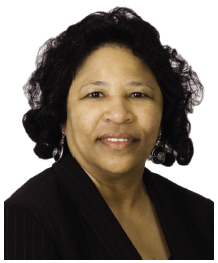
HEADQUARTERS: Houston, Texas
WEBSITE: www.nasa.gov
BUSINESS: Government
EMPLOYEES: 3,200
TITLE: Director, Office of Procurement
EDUCATION: MBA, Texas Southern University
WHAT I’M READING: 42 Rules for your New Leadership Role, by Pam Fox Rollin
INTERESTS: Youth mentoring
What do you think is the greatest issue or dilemma facing the African American community today?
The need to improve the life outcomes of the African American male economically, educationally, politically, and socially. As the mother of two African American males, I am aware that African American males need special attention in order to advance in life. I seek ways to assist in keeping black men and boys out of the prison system, to ensure that they complete high school and college, and that they are employed and participate in family life.
Are there any words of wisdom you would like to pass along to our readers?
In preparing to be a leader or manager, remember that doing a good job is not enough. You need to be social—let others get to know you and become comfortable with you by attending company events after work and doing lunch. Know people at all levels of the organization. Being a leader extends beyond your technical discipline. Your leadership and management skills can be applied in any situation, so think about how you can contribute to the success of your organization outside your normal area of responsibility.
Letter to President Barack Obama, the 44th President of the United States
Dear President Obama:
Our nation remains polarized on many important issues. As you prepare for a second term in office and put forth your priorities for the next four years, my hope for the country is unity on two key issues—improving our environment and investing in education.
My hope is that whatever accomplishments you achieve over this time, your legacy will be one of unity, investment and challenge.
Because we live in an extremely diverse country, with many backgrounds, beliefs, cultures and economic levels, it is important as the leader of our nation to instill a lasting sense of unity.
How can you help to bring the country together?
Build a future that people can collectively aspire to. Let us work vigorously to deliver a better world to our children, starting with a strong infrastructure and a clean energy policy that focuses on responsible resource development and high environmental standards.
Invest in our future through education—especially in (STEM) science, technology, engineering and math, as well as through job training and economic development. This will drive growth, create jobs and contribute to building stronger communities and greater civic unity. It will foster a culture of skilled and knowledgeable people that are working together for a greater cause—that America is a nation of great opportunity.
More than fifty years ago, President Kennedy challenged our nation to put a man on the moon, and that dare became a reality. Similarly, encourage the nation to embrace the belief that, while our challenges are large and complex, our cultural wealth and spirit of innovation uniquely positions us to achieve great solutions. In this way, through our cultural diversity, and diversity of ideas, we will find a common thread to pull the nation together.
America will rise to the challenge. And through that, the nation will find ways to enhance society, here and abroad.
Thank you for your leadership, Mr. President. We look forward to joining you as we embrace new challenges and opportunities over the next four years.
Tom King
Executive Director and President, National Grid USA
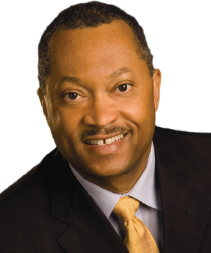
HEADQUARTERS: New York City
WEBSITE: www.mitchelltitus.com
BUSINESS: Public accounting firm
EMPLOYEES: 200
TITLE: Chairman & Chief Executive Officer
EDUCATION: BS, MBA, Binghamton University; Harvard Business School’s Owner/President Management Program
WHAT I’M READING: Rainmaking Conversations, by Mike Schultz & John E. Doerr
INTERESTS: I enjoy running (I’ve run the New York City and other marathons), collecting rare coins, and African art
How has the civil rights movement affected you personally?
My perspective of the civil rights movement is through the lens of my grandparents, parents, and older siblings. I learned from all of them that with determination, perseverance, and commitment you could succeed and overcome adversity while maintaining your dignity at all times.
How do you give back to the African American community?
I invest in all communities, including the African American communities where I was raised, through my time, talent, and financial resources.
I also mentor youth at risk because I believe they are this country’s greatest untapped resource and talent.
Are there any words of wisdom you would like to pass along to our readers?
Commit yourself to a life of learning and remember life is a journey with many challenges. However, none of those challenges are insurmountable if you trust yourself and are willing to make the necessary sacrifices. It is important to believe that tomorrow can be better than today.