By Catalyst
Why should your company devote resources to making LGBT employees feel safe, visible, and valued?
LGBT employees constitute a sizeable and dynamic workforce population with unique professional insights. As workplaces around the world become sensitized to LGBT issues, an increasing number of global organizations are making the creation and maintenance of an inclusive workplace culture a top priority. To attract and retain talented LGBT employees, more and more companies are offering benefits for LGBT employees’ domestic partners and implementing non-discrimination policies that cover sexual orientation, gender identity, and gender expression.
The advantages to companies of emphasizing inclusivity are clear. When LGBT employees feel comfortable being “out” at work, both individual employees and their employers stand to gain. Employees feel respected and valued—and studies show positive associations between companies’ inclusive policies and consumer brand selection. In other words, strong D&I programs breed loyalty in employees and customers alike.
It’s increasingly common for smart, forward-looking organizations to go beyond small-scale LGBT programs, such as employee networks, and instead focus on aligning such targeted strategies with overall business models that support the company-wide recruitment, development, and advancement of LGBT employees. In addition, global organizations are beginning to expand their LGBT policies and programs to include employees from all regions in which they conduct business.
A recent Catalyst tool, Global Lesbian, Gay, Bisexual, and Transgender Inclusion: Advocating Change Across Contexts, offers useful guidelines for D&I leaders to ensure their work environments are inclusive by helping to develop their organization’s LGBT policies. It is essential for any organization interested in expanding its LGBT-inclusion programs globally to understand local cultures, legal frameworks, beliefs, knowledge, and norms across different regional contexts.
The following series of questions will help you assess the level of LGBT inclusion at your organization and consider the development of broader and more globally inclusive LGBT programs and policies.
Understand local norms and laws.
- What are the norms in the countries in which your company operates?
- Are there specific laws that employees and staff should be aware of, especially during relocations/international assignments?
- Is homosexuality legal? Is same-sex marriage or domestic partnership legal?
- Are there legal restrictions on collecting demographic data about sexual orientation? Learn the ways in which these local norms and laws might impact opportunities for LGBT staff.
- Does your organization have an established policy for managing international assignments for employees who
- would be relocating with same-sex partners?
- If local laws are inconsistent with your company’s culture, how can you ensure inclusivity abroad? Learn to recognize and avoid heteronormativity.
- What LGBT-specific terminology is used in different national/cultural contexts in which your organization operates?
- Does your organization use inclusive language in invitations and for social/business networking functions (e.g., “partner” rather than “husband” or “wife”)?
- Do senior leaders in your organization model inclusive behavior toward LGBT staff? Evaluate and implement your company’s values.
- What behaviors/actions are valued in your organization? Do any of these exclude LGBT people?
- Have you engaged LGBT employees to influence and/or contribute to policy-making and program design (e.g., through focus groups or meetings with executives)?
- Has your organization engaged in community outreach or participated in/sponsored LGBT-themed events?
- Do you have LGBT antidiscrimination policy statements which are publicly available on your company’s internal and/or external website?
- Do you participate in benchmarking or other types of evaluation of your organization’s LGBT demographics and/or inclusiveness?
- Do you provide transgender-inclusive healthcare benefits?
- Do you offer comprehensive, organization-wide LGBT diversity and inclusion training?
To help broaden the impact of your own organization’s LGBT programming and discover innovative new ideas and compelling practices from other organizations, please visit www.catalyst.org.
Founded in 1962, Catalyst is the leading nonprofit membership organization expanding opportunities for women and business.
By Mary-Frances Winters

While diversity and inclusion (D&I) practitioners have been aware that the issues of diversity and inclusion span the globe, until recently the popular sentiment was that the term “diversity” was a US idea that did not play well in other parts of the world.
I think that the “tipping point” has occurred as we see rapid adoption of the terms diversity and inclusion in Europe and other parts of the world as well as CDO’s being named at European, Asian and Australian companies.
Some examples of the expansion of diversity and inclusion globally:
- Last year, the European Diversity Awards were launched to recognize and celebrate organizations and individuals who have demonstrated innovation, creativity and commitment to equality, diversity and inclusion. Sponsors include Google, Royal Bank of Scotland, Unilever, and Barclays.
- The Economist sponsored a diversity summit in London in December 2012 called The Value of Inclusion. It brought together 120 senior executives: leading HR, talent and diversity professionals to address the business imperative for D&I.
- In November 2012, Deloitte Australia and the Victorian Equal Opportunity and Human Rights Commission released a report based on the opinions and experiences of 1550 employees of three large Australian businesses. The study found that when employees think the organization is supportive of diversity and they feel included, they report better business performance in terms of their ability to innovate and their ability to response to changing customer needs.
- The European Diversity, Business and Inclusion Congress, dubbed as Europe’s groundbreaking Congress for CEO’s and diversity executives and practitioners, will hold its fourth conference April 25-26, 2013 in Vienna.
- Canada has addressed issues of equity and human rights for almost as many years as we have in the US. They too are now using “diversity and inclusion” language. The Canadian Institute of Diversity and Inclusion, a non-profit member organization has recently been formed to address diversity, inclusion, equity and human rights in Canada’s workplaces.
- A number of companies have chief Diversity officers. Credit Suisse Group’s, AG CDO Michelle Gadsden-Williams, is located in Zurich, Switzerland. She works closely with the firm’s four regional CDOs (e.g. Asia Pacific). Lisa Kepinski is chief diversity and inclusion officer at AXA in Paris, France. Examples of other global companies with CDO’s in Europe include Deutshe Bank, Daimler, Pearson, L’Oréal ,and Vodaphone.
- As South Africa continues to address post apartheid issues of equality and human rights, researchers and academicians have embraced the terms “diversity and inclusion” to discuss the difficult journey towards authentic inclusion.
“Today’s modern organisations have no choice but to face choices regarding how to implement diversity initiatives and treat their stakeholders, given the globalized nature of capital markets. Unfortunately, their foci appear to be narrowly deployed at the ‘managing diversity’ level, or even the ‘acknowledging diversity’ level, but not getting to the necessary ‘inclusion’ level.”
While the key diversity issues vary from country to country, gender and persons with disabilities are the two diversity issues that span the globe and most governments and businesses outside the United States have put heavy emphasis on these two dimensions. For example France, Germany and Italy have quotas for hiring people with disabilities and Norway enacted a quota (40%) for placing women on corporate boards.
Other key global D&I issues include immigration, race/ethnicity, LGBT, colorism, work-life flexibility, and generations/age.
One of the reasons that “diversity” as a concept has “gone global” is “globalization”. Many US based fortune 100 companies have more than 50% of their employee base situated outside the United States. Additionally companies are choosing to move headquarters operations to different countries to take advantage of more favorable business climates. Thus the blurring of strict “national” boundaries makes it imperative for D&I professionals to understand how diversity issues manifest around the globe.
Implications and Recommendations for D&I Professionals:
Diversity and inclusion practitioners must adapt a global mindset which means:
- Having knowledge of the history, the culture, and the economic conditions that exist outside of our own geographic regions;
- Understanding of geo-political conditions and the impact on the global workforce;
- Knowing how to adapt behaviors and thinking to be culturally relevant in different parts of the world.
The skill set that D&I practitioners need to navigate the fast moving, dynamic and interconnected world is very different from even 10 years ago. While HR acumen is a given, the ability to effectively leverage diversity and inclusion around the globe is equally important. I think we will find that D&I leaders will increasingly be selected based on their global skills, operations experience and their systems thinking ability.
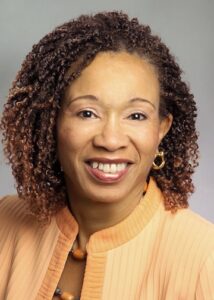
Dr. Mary-Frances Winters
Dr. Mary-Frances Winters is a leading diversity and inclusion practitioner and thought leader. She is the founder and CEO of The Winters Group, Inc., a 28 year old diversity and inclusion firm specializing in D&I assessment, education and strategic planning. Dr. Winters is the author of three books: Only Wet Babies Like Change: Workplace Wisdom for Baby Boomers; Inclusion Starts with I and CEOs Who Get It.
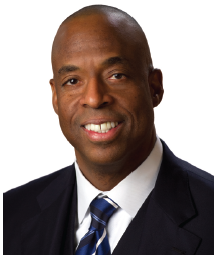
HEADQUARTERS: New York City
WEBSITE: www.axa-equitable.com
BUSINESS: Life insurance, annuity, and financial products and services
TITLE: Executive Vice President
EDUCATION: AA, University of Alaska; AS, Community College of the Air Force; BS, Southern University
WHAT I’M READING: The Warmth of Other Suns: The Epic Story of America’s Great Migration, by Isabel Wilkerson
INTERESTS: Civil War re-enacting, horseback riding, adventure running/traveling, driving my 1955 Packard convertible, and reading
Are there any organizations that you or your family has been a part of that benefitted you?
My wife and I, our children, and many family members before us attended Historically Black Colleges and Universities (HBCUs). I believe this experience provided us with the educational foundation and confidence to succeed. My wife and I both served in the Air Force. For me, being an Air Force officer nurtured my leadership and organizational skills.
How do you give back to the African American community?
I give back to the African American community in many ways. I am the president of a nonprofit, Day at the Ranch Program, where we bring kids from the inner city out to a ranch for a day to experience the history of African Americans in the West and learn the joys of outdoor life and working with horses. I am part of a professional men’s group that mentors promising young African American high school students. I am also a regular speaker at Morehouse College Leadership Classes.
By Grace Austin
‘News Lady’ Overcomes Discrimination, Leads Way for African American and Female Journalists
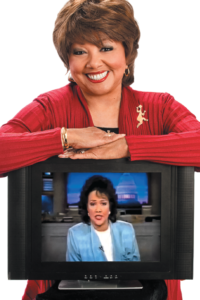
Carole Simpson
Still as feisty at 71 years old as she was during her ABC News heyday, Carole Simpson is truly a pioneer in the field of broadcast journalism. Current journalists like Robin Roberts have acknowledged Simpson as their forbearer and role model, an outspoken African American female in a business that was long a boys’ club.
“I suffered a lot of racial slurs and sexual discrimination, like being fondled and terrible things said to me. I worked in a hostile work environment and I had to ‘grin and bear it,’” says Simpson. “And then I found my voice; I was tired of it. I wondered when I would just be Carole, Carole Simpson, not a female or a black person, and it never happened. Because of that, I took it upon myself to be a leader against that, and I worked hard to get women and African Americans into leadership positions.”
From the beginning, Simpson has not been afraid to be different. Growing up on the South Side of Chicago, Simpson was singled out for her good grades, attending a predominately white high school where she excelled in academics and extracurricular activities. It was there that she joined her high school paper and realized she wanted to be a reporter.
When Simpson graduated, there were few careers and fields for an educated black woman. Simpson was encouraged by her high school guidance counselor to become an English teacher instead, citing the lack of female black reporters. Even her parents expected she would become a teacher.
“My parents wanted to be a school teacher, because they thought that would be safe,” says Simpson. “They thought that wasn’t a job for a ‘negro’ girl; that was a white man’s job. I just wanted to do something different.”
Simpson’s determination carried to her studies; she excelled at the University of Michigan, where she honed her craft at the school paper. She was the only African American to graduate in her class.
Simpson was the only graduate that couldn’t find a job—something she blames on discrimination. She later took a job at the Tuskegee Institute in Alabama, a frightening experience for a young black woman in the tumultuous South of the early ’60s. At Tuskegee Simpson experienced her first sexual harassment, personal experiences with the segregated South, and issues with “colorism,” or prejudice because of skin tone.
While initially interested in print journalism, a chance class at the University of Iowa changed her mind, turning her on to radio.
Simpson began her career at WCFL in her hometown of Chicago, later moving to television at Chicago’s WMAQ. At WCFL and WMAQ Simpson encountered notable racism and sexism, experiencing sabotage from co-workers intent on her failure. In the worst cases, they would steal her tapes or tell her the wrong address for an interview. Others targeted her for having a young child while working full-time, accusing her of being a bad mother.
Despite these obstacles, Simpson made a name for herself. She does acknowledge, though, that much of her success was due to changing times and the need for the token woman or African American. Much of it, too, was due to her talent, hard work, and perseverance.
“The handicaps that I had, of being black and female, were suddenly advantages [in the ’60s]. People were anxious to hire me, because the civil rights movement was happening, and they needed black reporters. I came along at the right time, at the right place, and ended up getting hired as a news reporter,” says Simpson.
During her time in Chicago, Simpson interviewed Dr. Martin Luther King, Jr., reported on the Richard Speck trial, and the riotous 1968 Chicago Democratic Convention.
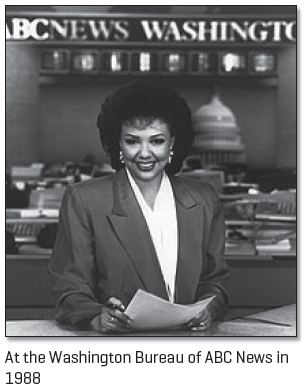
Simpson gradually made a name for herself in her hometown, leading to a job with the national network. Simpson joined NBC News in 1974, becoming the first African American woman to anchor a major network newscast. She later joined ABC News, serving as the anchor of the Sunday edition of World News Tonight from 1988 to 2003.
While at NBC and ABC Simpson still faced discrimination, although more subtly. It was often revealed in not receiving the “beats” she wanted. Instead of the hard-hitting political news she wanted to cover, Simpson was given, as many women were (and still are) undemanding positions that were rarely newsworthy. Her anger at the insolence and pattern of discrimination from her superiors led her to band together with fellow female employees (and later, African American employees).
They compiled data and eventually presented it to the corporate executives that were mostly unaware of such treatment. In some ways, her anti-discrimination campaign and subsequent demands, like a pay equity study from a third party and joint committee meetings, were precursors to the corporate diversity so familiar today.
Speaking up also had its consequences—it gave Simpson a reputation. Amongst her black colleagues, she was discriminated often for her light complexion, while with management and executives she was viewed as “a troublemaker, a loose cannon,” and even worse, “uppity.”
“I got to the point where I was like, ‘No!’ I was a thorn in the side of ABC News up until I left. I was always complaining about something,” recalls Simpson. “I knew the games they were playing, and I would call them on it. They would try to ignore me, but I would always say, ‘I’m qualified to do this.’ I would have to be treated like the rest of the anchors.”
Simpson’s career high, as she likes to say, was moderating the second presidential debate of then-incumbent George Bush and Bill Clinton in 1992. She was the first woman and minority moderator. This, like many of her successes, was due to an outcry for a woman or minority moderator, a position that had long gone to the older, white anchors like Tom Brokaw and Peter Jennings, certainly not to the weekend anchor of the evening news, and certainly not to a black woman.
“It was the highlight of my career. I think every journalist feels that [way], to do a presidential debate. To know that I was going to be the first woman and first minority to have this opportunity, I felt an incredible weight to represent women and the black community,” says Simpson. “That debate was seen by 90 million people all around the world.”
But seemingly in the early 2000s, Simpson was ousted from her longtime employer, ABC. The changes to ABC News that began in the mid-’90s, her reputation within the company, and her advancing age slowly pushed her out of the position she had held for decades.
She reacts bitterly to the firing in her memoir, News Lady: “I was no longer good enough to “go live.” Since when? A person who has spent her life in front of cameras, microphones, and live audiences, is all of sudden no longer capable?”
Despite this seemingly insurmountable setback, Simpson has gone on to a second career in the field of higher education. She continues to give back to the community and causes she feels most importantly about, especially education and women’s rights. She now works as a journalism professor and Leader in Residence at Emerson College in Boston. Her tireless work with Africa, first inspired by a trip to South Africa during Apartheid, includes donating thousands of dollars to establish the Carole Simpson Leadership Institute. The Institute, founded to help female journalists around the world, has trained more than 100 women since its inception.
“Things change—I got the anchor job, we got a women vice president, they hired two female correspondents; we got a bureau chief out of it. They really began to change things. But had I not been the one to speak up… there were no other women that wanted to speak up. No one wanted to do the talking, but I was not afraid,” says Simpson. “Although I left, I couldn’t be happier with what I’m doing now—teaching the journalists of tomorrow and trying to give them the passion I feel towards journalism.”
By Grace Austin
The Secondary Materials and Recycled Textiles Association (SMART) is developing grade-appropriate educational materials in conjunction with the Education Center to promote the concept of clothing as a recyclable product. The initiative will be promoted through the outlets of The Education Center to more than 750,000 educators, 15 million students, and 20 million parents. It will run through March.
“We are extremely excited to partner with The Education Center,” says SMART President Lou Buty. “Their team has a proven track record of developing creative and highly effective materials which teachers enjoy bringing into the classroom. We look forward to developing an impactful message which not only promotes but also encourages people to recycle clothing and textiles.”
SMART is a nonprofit trade association, founded in 1932, that uses converted recycled and secondary materials from used clothing, commercial laundries, non-woven, off-spec material, new mill ends, and paper from around the world. The Education Center was founded in 1973 by Marge and Jake Michel who, like many other educators, were frustrated by the lack of practical, ready-to-use materials for the classroom. They began creating several products, which expanded into The Mailbox magazine and many teacher-geared resources.
The materials will educate students and families about textile recycling and will also involve schools and communities in the effort. The goal is to introduce the concept of clothing and textile recycling to students through key classroom components that help the educator teach core subjects and skills. The program will also include a send-home component students can use to share with their parents what they have learned. The component educates them about textile recycling, while also demonstrating how their families can play a part in the mission.
“By using these materials, the students will learn that clothing is a recyclable product, just like aluminum cans, paper, and plastic products,” says Jackie King, executive director of SMART. “People don’t realize that 95 percent of all clothing and textiles can be recycled or processed by our member companies.”
By Julie Hayes
In 1992, Los Angeles, California faced political and social upheaval following the acquittal of four white police officers who had been videotaped beating black motorist Rooney King. Issues of racial discrimination and police violence had been common since the civil rights movement, but the Los Angeles riots triggered by the jury’s verdict opened up another question to equal rights activists: were institutions with power such as the police force, legal system, and government being used to keep minorities and the poor in their “proper” place?
Twenty years later, the nonprofit Operation HOPE is still working to fight the consequences of this societal trend. Founded in Los Angeles by John Hope Bryant after the L.A. riots, Operation HOPE is looking to celebrate their twentieth anniversary through continuing service to impoverished areas, working to increase financial literacy, and promoting a future where economic inequality is a thing of the past.
“Because of what happened to [King], the city changed, the Los Angeles Police Department changed, a community became actively engaged in its own redemption, and the global organization I founded, Operation HOPE, was born,” says Bryant, who is also celebrating his twentieth year as Operation HOPE’s CEO. “I am convinced that I would have never founded Operation HOPE, in its unique form, structure and approach, if it had not been for the unfortunate events of April 29, 1992.”
As the leading United States nonprofit organization in the field of financial literacy and economic empowerment, Operation HOPE has much to celebrate. Through championing the Silver Rights Movement, which calls for equal access to capital and highlights ways to make America’s capitalist economy work for the poor and underserved, Operation HOPE’s years of service have been marked by the development of initiatives and programs meant to educate and empower those who wish to aim for economic equality, an increase in financial education and literacy among youth and adults alike, and heightened efforts to involve corporate America and financial organizations in reaching out to the poor and impoverished.
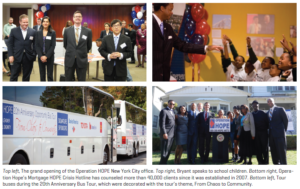
After two decades as an organization, Operation HOPE has individually served over 1.2 million people in 273 United States cities, as well as locations in South America and Haiti. However, Operation HOPE’s ultimate goal is to no longer be a necessity to society through the full realization of a thriving capitalist economy and the elimination of financial injustice.
To move closer to this goal, Operation HOPE launched a series of celebratory and empowering events and programs in 2012 to increase awareness and participation in their mission throughout the community. In July, the organization partnered with Gallup to found the American 2020 campaign, a national movement to lower high school dropout rates and foster entrepreneurship among the future political, economic, and business leaders of the United States.
American 2020 was created to assist the Business in a Box program, launched at the beginning of the anniversary year to provide entrepreneurship grants to young adults and children. For the 2013 business and school year, Operation HOPE is looking at ways to integrate these two campaigns into American educational systems and extend their reach to as many young entrepreneurs seeking mentoring as possible. By the end of the year, the organization hopes to have made progress towards their goal of quadrupling the percentage of students with an active business role model, from 5 percent to 20 percent.
“The Gallup HOPE index has shown us that 91 percent of all kids are not afraid to take risks, and that 77 percent of all kids want to be their own boss,” says Bryant. “But only 5 percent of kids have a business role model or a business mentor. That’s devastating. This program will kick off their economic energy, make financial literacy relative to their lives, make them more excited about education and graduation, and make ‘dumb’ uncool and ‘smart’ cool again.”
Operation HOPE’s capstone event in their anniversary celebrations, the HOPE Global Financial Dignity Summit in Atlanta, Georgia, followed up the November election by addressing how political leaders can set up a long-term system to solve some of America’s current financial crises, with focus on financial dignity, literacy, recovery, and stability. U.S. Federal Reserve Chairman Ben Bernanke headlined the event.
Operation HOPE plans to bring the ideas discussed during the Summit to Congress. Citing Dr. Martin Luther King, Jr. as one of the most influential motivators of Operation HOPE’s initiatives, Bryant looks forward to the day when the Silver Rights Movement will be a high priority among America’s politicians.
“With this discussion, we want to pick up respectfully where King left off with the conversation and the question of ‘Where do we go from here? [Will there be] chaos or community?’” says Bryant.
Though the future of financial equality is Operation HOPE’s ultimate concern, the organization has used the past anniversary year to pay homage to their roots. When the Los Angeles riots stirred up questions of racism and civil rights two decades ago, it made a lasting impression that is still influencing society and politics today. After twenty years of service, Operation HOPE believes they, too, are making an impression that will continue to change the lives of Americans for years to come.
By Maria Collar
Chief Consultant, Serendipity Consulting Service
In the recent inaugural speech the words “we were all created equal” resonated with great vivacity. Although from a diversity point of view this is certainly true, in truth to treat everybody the same is discrimination. Even though we were all created equal, to obliterate the distinct differences between “you and I” would be the same as to deprive life of its true essence.
Today, given the nature of a melting pot society, the term diversity encompasses initiatives that are less “affirmative action” oriented in that they value and manage diversity. Valuing diversity, in a multicultural world, involves acknowledging and recognizing the uniqueness of each individual, whereas managing diversity emphasizes developing strategies, policies, procedures, and objectives that understand the unique needs and contributions of every single individual. Thus, successful strategies do not only require a basic understanding but also contextual and functional knowledge of unique differences.
In this day and age, effective implementation of both inclusion and diversity strategies require an effort to change corporate culture and attitudes. Workplace inclusion understands the distinct values and, therefore, effectively manages the ethnic, socioeconomic, and gender variety within and between entities. An environment that authentically values our unique differences is able to thrive by fostering collaboration, participation, and innovation, as leaders who concentrate on integrating rather than polarizing values make better business decisions.
In the journey towards becoming a more culturally sensitive and inclusive individual it is important to adopt the appropriate transparencies. The following four competencies have been strongly linked to cultural identity development models in the literature. They will assist in gaining a deeper understanding of an individual’s culture in order to begin the critical introspection that is needed to move away from the “us” and “them” approach.
1. Awareness of own cultural values and biases. Culturally skilled individuals have moved from being culturally unaware to being aware and sensitive to their own cultural heritage and respecting differences. Therefore, they are able to recognize the limits of their competencies and expertise. Culturally skilled individuals are comfortable with differences that exist between themselves and others in terms of race, ethnicity, culture, socioeconomic, and beliefs.
2. Knowledge of cultural differences. Culturally skilled individuals possess knowledge about their social impact on others. They seek out educational, training, and experiences to improve understanding of culturally different populations. Consequently, are knowledgeable about differences on communication styles, they seek to better understand how different styles may clash with minority individuals and lessen the negative impact it may have with other individuals. Culturally skilled individuals pursue educational experiences that foster knowledge, understanding, and crosscultural skills.
3. Awareness of other individual’s worldview. Culturally skilled individuals are aware of emotional reactions towards other racial and ethnic groups, which may prove detrimental to the business process. Moreover, they are willing to contrast their own beliefs and attitudes with those of their culturally different affiliates in a nonjudgmental fashion. Culturally skilled individuals possess a knowledge base about other cultural groups, therefore are aware of the differences in life experiences, cultural heritage, and historical background.
4. Develop culturally appropriate strategies. Culturally skilled individuals are able to engage in a variety of verbal and nonverbal helping responses. They are able to send and receive both verbal and nonverbal messages accurately and appropriately. They are not tied down to only one method or approach, instead recognizing that styles and approaches may be culturally bound. When the cultural skilled individual sense that their style is limited and potentially inappropriate they are able to ameliorate its negative impact.
The personal arsenal of a culturally sensitive professional evolves throughout the journey of life. Mastery of appropriate techniques and skills is a lifelong process necessitating continual awareness of self, working knowledge of surroundings, and effects upon it. Attributes necessary for becoming a sensitive professional do not emerges from theoretical knowledge but with the holistic understanding of self and others.
By Grace Austin
Meals to Heal to Provide Home Meal Delivery Service for Patients
A former finance executive’s misgivings with patients’ food helped create a new venture designed to increase nutrition. Entrepreneur Susan Bratton brings more than twenty-five years of experience representing healthcare corporations to her new Manhattan-based company, Meals to Heal. The startup will offer weekly home delivery of fresh, nutrient-rich meals to cancer patients throughout the country.
After witnessing close friends and family suffering from cancer, Bratton noticed their need for high-quality foods and the difficulty both patients and caregivers had finding healthy meals that mitigated the side effects of cancer treatment. Lack of proper nutrition contributes to fatigue, weight loss, weakened immune systems, and depression in patients.
“Something had to be done,” says Bratton, founder and CEO of Meals to Heal. “The time and energy it takes to properly prepare food can be extremely taxing on patients, as well as caregivers. [Caregivers] often don’t know what meals will alleviate nutritional side effects. Poor nutrition is indicated in 50 to 80 percent of all cancer patients. We hope to help by bringing balanced nutrition, tailored to help patients manage nutrition-related side effects, right to people’s doors.”
The company was founded in 2011 and began taking orders in May 2012. Bratton invested her own money, and then was able to secure angel investors/private equity from high net-worth individuals.
“So many cancer patients struggle with proper nutrition,” states Dr. Elizabeth Chabner Thompson, MD, who is on the Scientific Advisory Board of Meals to Heal. “A service that provides convenient, safe, and affordable nutrition could help many people undergoing treatment for cancer, supporting them through their treatment and preventing weight loss.”
Orders can be placed online for various meal programs, including five-day and seven-day plans. In addition to home delivery of breakfast, lunch and dinner, patients will receive two daily snacks.
All fare from Meals to Heal is based on the Mediterranean Diet and meets the nutritional standards set forth by the USDA and the IOM.
By Grace Austin
President Obama and Congress passed the Jumpstart Our Business Startups (JOBS) Act in April 2012, a bipartisan law that became effective this January. This particular legislation was designed to encourage small business and startup funding by easing regulations and allowing for more capital investment from private citizens.
The JOBS Act further solidifies the emphasis placed on small businesses by both Republicans and Democrats. In essence, the JOBS Act allows businesses to accept small contributions from individuals, what has come to be known as crowdfunding.
One of the JOBS Act’s provisions is an annual investment cap. For those who make under $100,000, they can invest a maximum of 5 percent of their income, while those who make more than $100,000 may invest up to 10 percent. A startup can raise $1 million through the JOBS Act.
There are a few regulations as well: A company can only sell to investors through a middleman, like a website, that is registered with the SEC. The middleman can only sell shares that come originally from the company.
Crowdfunding is not a new phenomenon, but incorporating technology into the process is. (Micro-lending is a precursor, offering loans to individuals in impoverished nations to start their own businesses. The most notable instance is the Grameen Bank.)
Crowdfunding sites usually work like so: one posts a project pitch, offers a deadline, and specifies an amount needed to reach one’s goal.
In addition to financial support, companies may find other benefits from crowdfunding. Being able to test marketing strategies, promote products, and receive actual customer data are important added extras. Although crowdfunding needs a substantial time investment (using social media and uploading videos are common tools to draw in an audience), as the thousands of entrepreneurs that posted their product or project through crowdfunding websites and received successful bids can attest to, it can be worth it.
Kickstarter, by far the most popular and famous of the crowdfunding sites, was launched in 2009. The platform for creative enterprises has helped launch everything from video games to men’s underwear lines. Over 75,000 creative projects have been launched since Kickstarter’s inception, according to their website.
Fundable, the first equity crowdfunding platform, launched concurrently with the JOBS Act. Fundable typically raises small sums of money for startup businesses. Startups can pitch their company and raise funding via the website. As opposed to Kickstarter, Fundable also offers equity to potential investors.
With these new opportunities for investment and capital through crowdfunding, the government is hoping that more Americans will invest and be encouraged to start their own business. After all, according to the U.S. Department of Commerce, small firms represent 99.7 percent of all employers, and employ half of all private sector employees.
By Mary-Frances Winters

Women hold the majority in the global population; the majority who are earning baccalaureate and advanced degrees but are still woefully underrepresented in positions of power. We see this dynamic changing rapidly not only because of the demographic reality but because of the global economic imperative to level the playing field.
There were a number of defining moments for women in 2012:
- In February 2012 the Defense Department opened up 14,500 positions to women that had previously been limited to men and lifted a rule that prohibited women from living with combat units.
- Fortune 500 board seats held by women in the US went from 16.1% in 2011 to 16.6% in 2012
- Women on corporate boards in the European Union rose from 11.8% in 2010 to 13.7% in 2012
- Women now earn almost 60% of university degrees in the USA and Europe.
- Women’s reproductive rights issues were debated heavily in the U.S. 2012 Presidential campaign and by and large women were victorious in maintaining their right to choose.
- When Marissa Mayer was named CEO of Yahoo in July 2012 (making her the 20th female Fortune 500 CEO) and shortly thereafter announced that she was pregnant, the media was all abuzz with questions of her ability to be a CEO and a good mother. This was a defining moment in shifting stereotypes about women CEO’s and paradigms of “right and wrong”. Would anyone ask if a man could be a good father and CEO?
- The newly sworn-in 113th U.S. Congress has 20 female senators and 82 female representatives, a record number.
Other global trends for women that are compelling:
- According to a 2012 study by Booz and Company, an estimated one billion women are expected to enter the global workplace in the next decade. The report asserts that the increase in women in the workplace would not only contribute to gender equality but would also positively impact global economic growth.
A 2011 Grant Thornton International Business Report revealed:
- Women hold 20% of senior management positions globally, down from 24% in 2009 and up only 1% from 2004.
- Women have seen the most progress in their share of senior management roles in Thailand, Hong Kong, Greece, Belgium and Botswana, where the percentage of women has risen by at least 7% since 2009.
- Globally, only 8% of companies have a female CEO. In Asian economies, Thailand leads the way with 30% of companies employing female CEO’s followed by China (19%), Taiwan (18%) and Vietnam at 16%.
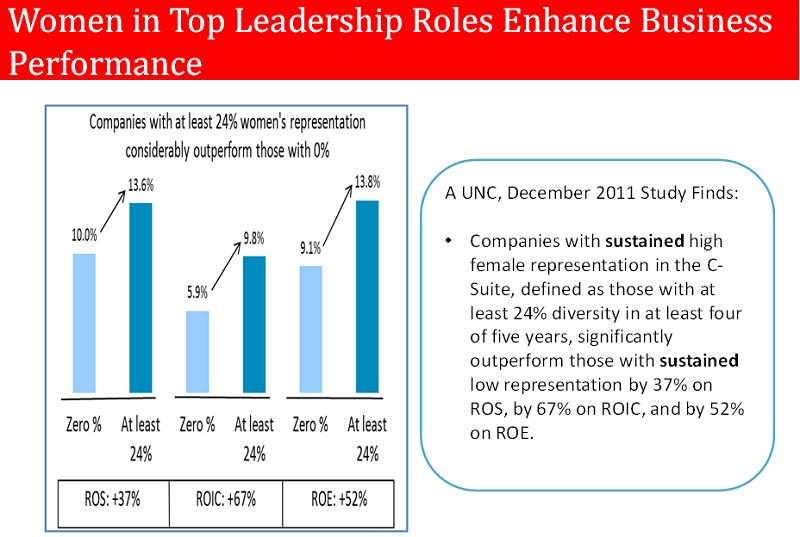
The data is compelling and now fairly plentiful that shows companies with women in leadership positions outperform those that do not.
Implications and Recommendations for D&I Practitioners:
While gender issues have been at the forefront of D&I initiatives for almost three decades now, the data show that progress is slow and in some cases stalled. According to Kathryn Kolbert, director of the Athena Center for Leadership at Barnard College, women’s advancement has flat lined in recent years, “We made great progress in the 1970’s and life has changed significantly, but progress for women has plateaued in rights, in leadership and in the ability to contribute equally in social and cultural affairs.”
Globally, women’s progress varies vastly depending on the region of the world. There is a lot of attention in Europe, with some countries having passed or considering passing legislation for quotas for women on corporate boards. In other areas such as parts of Asia and Africa, the plight of women is dismal.
Woman’s activist Gloria Steinem said that she believes the reason we are stalled is that resistance comes at two points in a change effort, at the very beginning and at a point where it looks like a critical mass, in this case women, will outnumber the existing power base. She believes we are at the second point of resistance.
We might say 2013 is a tipping point for women! D&I practitioners need to focus on why progress is stalled (if that is the case in your organization) and aggressively advocate for equal pay, upward mobility, and the compelling business case for ensuring that women are represented at all levels of your organization.
Dr. Mary-Frances Winters
Dr. Mary-Frances Winters is a leading diversity and inclusion practitioner and thought leader. She is the founder and CEO of The Winters Group, Inc., a 28 year old diversity and inclusion firm specializing in D&I assessment, education and strategic planning. Dr. Winters is the author of three books: Only Wet Babies Like Change: Workplace Wisdom for Baby Boomers; Inclusion Starts with I and CEOs Who Get It.