By Tory Clark and Larry Griffin, co-founders and partners, Bridge Partners LLC

Tory Clark
If you are a human resources or diversity and inclusion professional, we imagine that you have probably had at least one of the following recruiting interactions with hiring managers:
“We don’t need to focus on diversity recruiting—we are already diverse.”There is no growing organization today that cannot make a strong business case for focusing on diversity recruitment. You may see diversity in the organization when you “crunch the numbers,” but do you have the very best possible talent at the senior-most levels?
“The hiring manager is 100% behind the broad diversity recruitment initiative…but maybe it’s not the best approach for this search.” The comments range from “It never works—the talent isn’t out there” to “Diversity recruitment means the process always takes longer.” These assumptions can be disproved by a solid business case for diversity and a strong diversity-focused recruiting team/partner.
“The talent isn’t out there.” Yes, it is. Diversity recruiting requires effort and focus. Obstacles to desired results include:
- An inadequate diversity outreach effort. Building the capability to identify high-caliber minority candidates and developing a positive relationship with them is a process, not a one-off event. It is necessary to build your brand as an employer of choice and invest time in understanding the market.
- A recruiting team/search partner that “hopes to come across” minority candidates, rather than actively pursuing that talent. While in-house recruiters and traditional search firms may have the best intentions, they are often not in a position to prioritize diversity. As with any other area of your business, you will be best served by experts.
- A focus on the path of least resistance—recruiting candidates who are already looking for their next career move, rather than those who may be “below the radar.” Reach out and recruit your candidates—if they don’t come to you, you need to go after them, or use a search firm that can effectively do it on your behalf.

Larry Griffin
Clients across all sectors are requesting that their traditional search partners include high-caliber, diverse candidates in search shortlists; unfortunately, in many cases, their requests are being met with limited or no success.
There is a reason for this—many search firms view driving diversity into a shortlist as something that is done “upon request,” not as a matter of course. When we founded Bridge Partners LLC as a diversity-focused search firm a decade ago, we struggled with the idea that we may not be needed in five years—certainly not in ten—as diversity became naturally embedded in executive search at all levels and across all functions. We were wrong; the need for an innovative search firm that operates at the senior level and focuses on inclusivity has never been greater.
Critical to our success is our development of a distinct search practice and methodology that can identify, approach, and attract diverse executives. We are a diverse team committed to the advancement of diverse professionals in senior roles; and we have years of experience building relationships with these coveted, high-caliber executives and addressing the specific concerns they have when contemplating a move.
By leveraging a proven, research-driven methodology, a robust and continually updated database of senior executives, and a strong and actively cultivated network that we constantly develop and access, we have an significant edge in attracting the most qualified executives and building an inclusive candidate shortlist.
Tory Clark and Larry Griffin are co-founders of and partners in Bridge Partners LLC, a retained executive search firm that specializes in leadership and senior-level recruitment, both in the U.S. and internationally. Learn more at www.bridgepartnersllc.com.
How the nation’s largest pharmacy health care provider fills its pipeline with diverse talent.CVS Caremark continues to hit new marks of achievement in its commitment to recruiting and retaining talent from our nation’s diverse population. As an innovative health-care leader, CVS Caremark builds partnerships that attract and equip diverse talent for dynamic and rewarding careers. Our strong support of education, training, healthy living, and career opportunities helps ensure that CVS Caremark’s diverse workforce is productive and thriving. A culture that cultivates an appreciation of differences is the cornerstone for this success.
The CVS Caremark Workforce Initiatives team performs local, state, and national outreach that targets youth, mature workers, veterans, and people with disabilities. Also, partnerships with schools, churches, universities, and faith-based and community organizations help us find and hire talented people with diverse backgrounds.
Pathways to Health Care Careers, a program that focuses on underserved youth, provides hands-on career exploration through job shadowing, intern experiences in CVS/pharmacy stores, training, mentoring, and employment. In addition, elementary and middle school students are introduced to rewarding occupations within the pharmacy and health care industries at career fairs, during CVS/pharmacy store visits, and via in-school presentations by technicians, managers, and pharmacists. As part of the seamless transition from school to work, store associates and managers help guide young people to post-secondary opportunities at partner colleges and universities.
Talent is Ageless is an initiative that cultivates mature job candidates who are either re-entering the workforce or changing careers. They often bring skills, experience, a strong work ethic, knowledge, and a passion for customer service to the job. National associations, such as the American Society on Aging (ASA), Jewish Vocational Services (JVS), and other agencies, help CVS Caremark reach and engage with older workers.
Veteran and Military Alliances, such as CVS Caremark’s partnership with Hiring Our Heroes (a U.S. Chamber of Commerce initiative), connects men and women who are leaving active duty, or who are in the National Guard or Reserve, to meaningful jobs within the company. CVS Caremark partners with Hiring Our Heroes and other military-focused organizations to reach potential employees who are leadership and management ready. As a result of these partnerships, CVS Caremark’s Workforce Initiatives team has hired veterans and military spouses at job fairs around the country.
Abilities in Abundance connects individuals with disabilities to fulfilling careers with CVS Caremark. Vocational rehabilitation agencies, schools, and nonprofits are valuable partners in helping to identify talented and enthusiastic associates.
CVS Caremark recognizes the role training and development play in helping workers reach their potential, and in enhancing employee retention. Endless learning opportunities are offered at every level of the organization. A robust suite of training tools reinforces each employee’s skills and helps advance his or her career.
In partnership with community agencies, the company has opened a number of CVS/pharmacy Regional Learning Centers (RLCs) in cities across the U.S. These RLCs are fully operational store and pharmacy training locations that support the development of employees at all levels.
A vibrant, diverse workforce and ongoing opportunities for career growth do nothappen accidentally. CVS Caremark’s Workforce Initiatives team aggressively seeks new opportunities to hire, train, and retain a quality workforce that reflects the communities it serves.
Seattle’s CityU employs a three-step process to recruit and retain a diverse student body.

“According to recent reports, 60 percent of job openings will require a college degree in four years. Considering the number of people that do not have this prerequisite, college classrooms are filled with what was once called ‘nontraditional students.’ At CityU, we recognize that students have families, careers, financial obligations, and lives beyond what is happening in the classroom. The diversity of student needs, skills, and experience begs universities like ours to offer more flexible and affordable learning options. In offering these options, universities are bound to see improvements in their recruitment and retention efforts.” – Marianne Fingado, Vice President of Enrollment at City University of Seattle
As an institution focused on serving the working adult and transfer student, City University of Seattle (CityU) has developed some best practices for recruiting and retaining a diverse student body—a daunting task in today’s market.
Here are three ways CityU is recruiting and retaining a diverse student body:
1. Communicating Often and Clearly
When recruiting and retaining a diverse student body, it is extremely important to create an academic atmosphere that fosters clear and open communication. Prioritizing student achievement and service, and putting policies in place that require a 24-hour follow-up to all communications, is necessary to recruiting and retaining students today. Hosting a chat feature on the university’s website and carefully leveraging social media also enhance conversation between students and their current or potential university. Open communication is vital to growing any relationship. The relationship with a prospective or current student is no different.
2. Making Education Affordable and Accessible
As the job market continues to demand higher levels of education, the cost of that education continues to increase. To recruit and retain a diverse student body, universities must offer affordable and flexible learning options that meet the needs of full-time workers, parents, transitioning veterans, and others trying to balance work, life, and school. Convenient onsite and online options, as well as competency-based modalities (offering credit for experience) and need-based scholarships, are crucial to meeting the modern student’s needs and thus, are essential to recruitment and retention. CityU offers competency-based education as a way for students to demonstrate (and get credit for) what they already know, so they can spend time taking classes that teach them new things. After all, students expect to attend a university to learn what they do not know, and gain the skills and knowledge they do not have.
3. Offering an Education that is Relevant to People’s Lives
There is inherent value in getting an education. However, in today’s world, education is often judged by how it can be applied. With the high cost of education, students are actively looking for schools and degrees that will help them find and grow a career. Offering a curriculum informed and taught by professionals who are leaders in their respective fields, enables students to grow professionally and academically, while getting a degree. By taking this approach, CityU supports the career success and overall satisfaction of its students, and has definitely enhanced its recruitment and retention efforts.
These are just a few of the recruitment and retention tactics that have been employed by City University of Seattle. We hope these tactics are useful to you as you pursue your university’s recruitment and retention objectives and look to improve student satisfaction.
By Dwain H. Celistan, Executive Vice President and Global Diversity Practice Leader, DHR International

Dwain H. Celistan
In the first quarter of 2014, less than 10 percent of the Fortune 500 CEOs were diverse (defined for this article as gender and ethnicity). Data for other leadership levels within these organizations are not as readily available, but most sources suggest that the percentage of direct CEO reports, as well as the next level of direct reports, is also less than 10 percent.
Many organizations have modest levels of diverse leaders—or none at all. But there is a way to remedy this situation. When an opening for a leader presents itself, and an external candidate is required, a search firm can help source strong diverse talent. DHR International is particularly strong in this regard, since a third of our placements are diverse.
Sourcing and securing diverse leadership talent can be challenging. However, it is a hurdle that can be overcome, as illustrated by this case study:
The leader of a large procurement team for a Fortune 50 company, with responsibilities of over $3 billion, was looking for additional leadership talent. Because of the capabilities required, he needed to look outside his organization. Candidates for these leadership positions would have to 1) lead in a manner consistent with the company’s core values and 2) demonstrate a high level of competence. The pool also needed to include diverse talent.
The two positions had been open for nearly a year, during which time the search continued through the company’s internal efforts and those of a contingent search firm. Thus, the company demonstrated patience and a commitment to the high expectations originally set for these new leaders.
The organization selected DHR International, led by Executive Vice President Dwain Celistan, to fill the two positions. DHR International is a Top 5 global search firm with a commitment to identifying great talent and including diverse talent as part of candidate slates.
For this organization, a successful candidate pool would have to 1) come from a narrow industry group, 2) achieve a desired score on two third-party assessments, and 3) include diverse talent. DHR International sourced the talent requested. It required extra effort to identify diverse candidates that met the criteria.
Following an extensive interview process, the two positions were filled with diverse candidates. The pool proved to be so rich that a third diverse candidate was selected for another position.
In summary, the organization was able to hire three diverse leaders whose leadership styles were consistent with the culture for these challenging and important roles. In fact, one of the newly hired leaders was promoted within two years. These fantastic results—as well as subsequent process improvements and millions of dollars saved—led to an expanded partnership between that organization and DHR International.
For information about how DHR International can help your organization, regardless of size, to expand diversity in its leadership team, please contact Dwain H. Celistan, Executive Vice President and Global Diversity Practice Leader, at [email protected], or call 312-782-1581.

Jeff Joaquin, Policy Analyst Intern, Manitoba Diversity Internship Program, Department of Health, Government of Manitoba and Barbara Crumb, A/Director, Disaster Management, Department of Health, Government of Manitoba
Recruitment and retention strategies must consistently be developed and improved upon for an employer to remain competitive in Manitoba’s labour market. Adding to the challenge of recruitment and retention is that of ensuring that the workforce is as inclusive and diverse as possible. To that end, the Manitoba government has continually implemented and updated policies and programming that align with our vision of a civil service reflective of the population we serve.
One of the initiatives implemented by the Manitoba government is the Manitoba Diversity Internship Program introduced in 2013/14. This one-year internship is for high-potential external candidates who self-declare as persons with disabilities, Aboriginal persons, or members of a visible minority.
To address the need for overall renewal and succession planning, the Manitoba Diversity Internship Program requires that departments submit proposals for positions in which they anticipate future vacancies. For example, this may be in response to expected retirements or for positions that are typically more difficult to fill, such as in rural locations or certain technical areas of expertise.
The interns are recruited for one-year terms, with a commitment to appoint successful participants to a government position at the conclusion of the program.
Each internship placement focuses on occupation-specific experience, and offers the intern an opportunity for rotational assignments within the department or similar occupational groups across government.
As part of the program, interns are eligible for training and courses specific to their individual learning plans. Participation in the program includes a strong focus on mentorship, an introduction to various employee networks, and participation in many of the Manitoba government’s diversity-related learning events, conferences, and workshops.
The Manitoba Diversity Internship Program’s training curriculum also includes participation in the Manitoba government’s “Diversity at Work” workshop. The aim is for these interns to become equipped to be informal ambassadors, promoting diversity and inclusion in each of their respective workplaces.
Led by its senior leadership group, the Manitoba government continues to make significant strides in improving its already award-winning diversity and inclusion programming. (This includes being named as one of Canada’s Top Diversity Employers in 2012, 2013, and 2014.) Each department has its own diversity and employment equity plan in place. These leader-driven strategies help shape the organizational culture, according to the unique realities and context of each department, into one positively linked to both retention and engagement rates within the civil service.
The Manitoba government is committed to a workforce that is both inclusive and representative of the population it serves. We take pride in having made significant strides in living up to this commitment. We continue to demonstrate leadership to our province in building diverse and inclusive workplaces.
Georgia Tech Creates the First ERG for Introverts
By Cheryl D. Cofield
Director of Culture, Diversity & Inclusion
Georgia Institute of Technology

“As I began recognizing the complex nature of my own temperament. I realized that, while I had been sort of ‘playing an extrovert on TV’ to survive the aggressively fast-paced, results-driven corporate culture of my former employer, it was actually safe to ‘come out’ of my introverted closet to embrace my truer nature in the more cerebral and introspective academic environment at Georgia Tech.” –Cheryl Cofield
Since first opening its doors in 1888, the Georgia Institute of Technology has long been known for its culture of academic excellence, and for fostering technological advances and innovation. As a science and technology-focused learning institute, Georgia Tech is renowned for its deeply held commitment to improving the human condition. Now, members of the Georgia Tech employee community are developing innovative ways to hardwire inclusive excellence into the campus’s DNA, and increase community and organizational effectiveness by sustaining a work environment where all employees feel supported, valued, respected, productive, and engaged.
In September 2013, Georgia Tech, through the Office of Human Resources (OHR), created the nation’s first Employee Resource Group (ERG) specifically for introverts, called “Web of Brilliance” (Web). In addition to offering staff and faculty a true “sense of belonging,” and enriching the overall employment experience by contributing to a campus environment where employees feel supported, valued, and respected, Web provides a safe forum for introverts to explore their unique gifts and examine the “quiet” nature of their significant contributions.
Since introverts are generally modest and reserved people who rarely seek the limelight, their strengths are often masked and their intellectual depth is often discounted or overlooked. The ERG educates those who work with introverts, brings active awareness to the impact introversion has on work style, and provides insights into the challenges introverts face in extrovert-ideal workplaces. It also dispels notions that extroversion is “right” and introversion is somehow “wrong” by reframing introversion as an interesting aspect of identity.
The introvert group is the first of its kind in the US. The approach to managing the group is, therefore, being “birthed” day by day. It is managed by introverts with introvert sensibilities in mind; there is a spaciousness to the approach which leaves room to think, room to breathe, room to reflect, and room for people to be who we are with no forced “extroverting” required.
More than 130 staff, administration, and faculty members attended the initial kickoff meeting for Web, where they broke the ice by sharing poignant “Six Word Memoirs” and engaged in a think tank/affinity mapping reflection collage, resulting in more than 200 ideas toward the ERG’s annual business plan.
Putting Our Plan into Action
As a part of the plan, we’re developing introvert-friendly hiring processes and procuring “job aids” to enhance each introvert’s ability to thrive in the Georgia Tech workplace. For instance, we’re recommending headphones with apps containing “white noise” or “pink noise,” as well as magnets, mugs, and T-shirts, over-the-door hangers, and cube curtains containing messages like “Introvert at Work.” We’re also creating official protocols for proactive reflection, designating areas as introvert “chill zones,” and lobbying for the configuration of serene, calming spaces designed for introspection and thoughtfulness—that is, designed with visual and acoustic separation, and little outside sensory stimulation or distraction.
In 2014–15, we’ll spread the good word of Georgia Tech’s pioneering innovation by creating a blog for introverts, branding introvert-related collateral, showcasing the school’s introverted executives and leaders, and sharing thought leadership at national and global conferences. We already presented ERG-related sessions with Princeton and MIT at the College and University Professional Association Annual Conference and Expo. We also presented on the impact introversion has on work style and the challenges introverts face in extrovert-ideal workplaces for The Conference Board and Atlanta Diversity Management Advocacy Group. We’ve also been tapped to make similar presentations at a plethora of upcoming national conferences, including The Conference Board’s 2014 Corporate Diversity & Inclusion Conference, Linkage’s Institute for Leading Diversity and Inclusion, and the Society for Diversity’s 2014 Diversity Leadership Retreat.
We’ll continue collecting data to better understand the nature and needs of introverts, create a resource guide titled How to Manage Introverts: A Guide for Extroverts, by Introverts, and a resource that helps reframe perceptions, dispel myths, and break stereotypes. In future months, we’ll engage introverted employees through special interest groups such as TED Talk discussion circles, local/regional/national “travel clubs” that tour state-of-the-art innovation centers, and a “Special Edition Toastmasters” tailored for introverts. Finally, later this spring, we’ll begin designing a professional development series focused on embracing the unique strengths of introverts, getting noticed, becoming better conversationalists and public speakers, and developing strategies to ensure the success of introverted students and leaders.
Since Georgia Tech is one of the few places where it actually is about rocket science—where the nature of the work is analytical, contemplative, and life-changing—we honor the desire many people have to put down the “extrovert mask,” and we respect their preference to be left alone to perfect equations and formulas, produce one-of-a-kind works, and otherwise improve the human condition.
And finally, because Georgia Tech is renowned for fostering innovation, we think it is fitting to categorize introversion as a dimension of diversity and develop innovative ways to support and affirm staff, faculty, and students who represent this important, yet rarely talked about, diversity profile.
If the recruiting process is a courtship, then an employee’s first days set the tone for the marriage that follows.

Julie Kampf is CEO and founder of JBK Associates International, an award winning executive talent solutions organization that specializes in senior-level talent. Learn more at JBKAssociates.net.
By Julie Kamph, CEO and Founder, JBK Associates International
After more than a decade spent running a firm that specializes in diversity recruitment and retention, I’ve learned that success comes down to building genuine relationships. Given the stakes and the sensitivities that come with even discussions of diversity, these relationships only develop when every step of the process shows care and integrity.
Ironically, the organizations that do best in diversity recruitment don’t prioritize diversity above all else. They prioritize diversity equally with skills and cultural fit. It’s easy to take a shortcut by permitting a spot on a slate for a diverse candidate who may be less qualified, but that approach puts hiring managers in an impossible position and sets up potential employees for failure—hardly a formula for respectful relationships.
JBK Associates International conducts hundreds of searches including some for highly complex roles, and I can tell you that it’s a mistake to suggest that diverse candidates with top qualifications just aren’t out there. They are out there; they just require effort to find and attract.
It helps to have a diverse hiring team. Clients who do are more likely to show the sensitivity needed to answer common tough questions ranging from “Am I on this search because I’m a person of color?” to “Why does no one running this company look like me?” At JBK, the experience and skills of a fully diverse team help us work through the questions to build a promising candidate-employer relationship.
We also follow up closely with every executive we place—that’s when we see the impact of onboarding. If the recruiting process is a courtship, then an employee’s first days set the tone for the marriage that follows. Diverse employees who don’t receive thoughtful onboarding can feel like a new spouse left alone to take out the trash, and that disappointment makes an early exit look tempting. Those welcomed with a customized program, resource groups, mentoring, and a willingness to listen will want to stay—provided they have the chance to grow.
The most effective tactic I’ve seen for instilling that confidence is sensitivity training. The benefits of diverse perspectives come at the price of tough conversations, and few executives have a natural ability to negotiate tough conversations in an environment that’s multiracial, multigenerational, gender-balanced, and filled with employees of different faiths, sexual orientations, physical abilities, and backgrounds.
Internal audiences may not always welcome sensitivity training, but its absence has real costs. When employers don’t train managers to question the assumptions and filters they use to make business decisions, diverse new employees may need years to assimilate. By shortening the assimilation period, organizations can drive gains in productivity and also increase their ability to retain the diverse workforce they’ve worked so hard to attract. Increased retention in turn will help draw new diverse employees.
As with anything involving human relationships, successful diversity recruitment and retention takes commitment. For the team and clients of JBK Associates International, that commitment pays off by offering us exciting opportunities to work with some of the world’s best diverse talent.
CEO for the U.S. and Senior Managing Director for North America Jorge Benitez, on the role an inclusive culture plays in enabling Accenture to attract and retain diverse talent worldwide.

Jorge Benitez
At Accenture, embracing inclusion and diversity in the widest possible sense—beyond gender, ethnicity, or religion—is part of our recipe for success. Our ability to harness the rich diversity of our people—their unique mix of capabilities, expertise, and their commitment—allows us to truly understand and be relevant to our clients. It makes us stronger, smarter, more innovative, and a better-performing company across all dimensions.
We recognize that each person has unique strengths and that by embracing those strengths, we achieve success, foster innovation, and deliver high performance. We invest in the professional development of our employees—directing more than US$875 millionannually to employee training, including customized inclusion and diversity programs.
Both our global and local inclusion and diversity initiatives underpin our focus on building a dynamic workforce equipped with the skills, passion, and energy to deliver high performance to our clients.
Globally, we provide guidance, coordination, and vigilance around our priority initiatives and champion best practices across the organization. Our global strategy sets overarching objectives and outlines key tactics for raising awareness and building diversity into our recruiting efforts and talent supply chain. The strategy also addresses other areas essential to meeting our goals, including promoting a discrimination-free and harassment-free work environment for all Accenture employees around the world.
Employee resource groups (ERGs) help drive our activities, both internally and externally. Based on local demand and interest, these groups differ from location to location. But all of them offer members opportunities to collaborate with colleagues who have similar interests or backgrounds and participate in career development workshops, mentoring, and local recruiting and community service activities.
At the same time, leadership at Accenture takes an active role in championing an inclusive and diverse workplace. From our board of directors to our executive leadership team, and through every facet of our business, our leaders are committed to inclusion and to rewarding our people on the merits of their contributions.
At our locations across the globe, each managing director, in addition to his or her business-facing role, serves as a human capital and diversity lead, helping to implement our Inclusion & Diversity programs. Additionally, the Accenture Diversity Council, which comprises company leaders (including me), sets the strategic direction of our Inclusion & Diversity actions globally, including assessing the issues we might face.
At Accenture, we like to say that our people are the thousands of diverse pieces that complete our mosaic—and I am a part of that. Through championing inclusion and diversity, and the experience of working at Accenture every day, I see that by bringing people together, we unlock the power of an inclusive culture and are able to leverage the power of diversity.
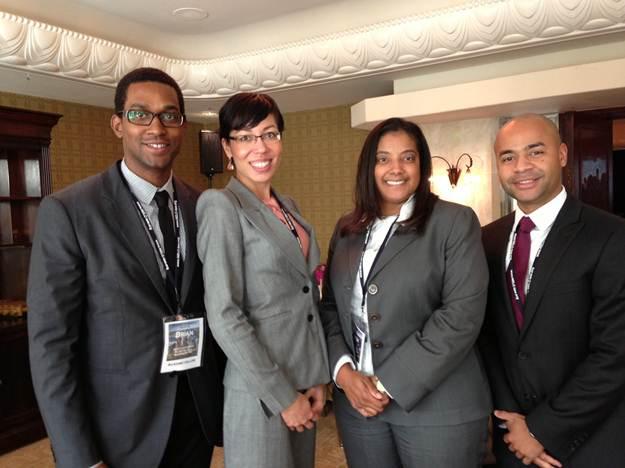
FordHarrison Associate Brian Cunningham, Associate Aisha Sanchez, Partner Vista Lyons and Associate Luis Santos attending the 2013 National Employment Law Council (NELC) conference.
FordHarrison is a labor and employment law firm with 27 offices across the U.S. A member of the global employment practice alliance Ius Laboris, our resources allow us to provide clients with sound legal advice, practical counseling, and excellent client service—no matter where in the world they operate.
The firm believes a diverse and inclusive environment creates a pathway to success and employee fulfillment. Our efforts to create a more diverse and inclusive workforce are focused on three objectives—to recruit, retain, and advance; to create a better workplace; and to create an engaged and active workforce.
Some examples of our most successful efforts include:
- Implementing a pipeline initiative for diverse attorneys. One significant reason that associates leave firms is lack of mentoring. We provide all diverse associates a 4-member mentoring network for their first three years of employment. This network helps new associates foster multiple relationships across the firm, ensures meaningful work assignments and accelerates the diverse associate’s overall professional development. Currently, 5 of the firm’s 34 diverse associates are being mentored through the pipeline initiative—11 of the firm’s 81 partners serve as mentors.
- Supporting our diverse attorneys’ growth and learning. Providing internal and external learning opportunities helps us to attract and keep our diverse talent. We’ve sponsored the Corporate Counsel Women of Color’s National Conference, as well as the Florida Diversity Council’s LGBT-Allies Diversity Summit, which was co-chaired by one of our associates. An associate in our Chicago office served on the National Summit of Black Women Lawyers Steering Committee. Our attorneys have attended and spoken at conferences hosted by the National Employment Law Council, the National Asian Pacific Bar Association, and the Leadership Institute for Women of Color Attorneys.
- Embarking on a campaign to increase cultural competence within the firm. Cultural competence is critical to recruiting and retaining diverse attorneys. Spearheaded by the firm’s diversity partner, Dawn Siler-Nixon, and the firm’s Executive Diversity Committee, the campaign includes a cultural competence panel, featuring diverse in-house counsel and law firm attorneys, as well as an email series about cultural norms and blunders. Our attorneys will also take a cultural competency assessment and participate in cultural competence and unconscious bias workshops led by renowned diversity consultant Verna Myers.
- Championing our diverse attorneys by honoring their achievements. Recognizing our attorneys’ accomplishments helps to attract and retain diverse attorneys. For example, we recently successfully nominated an associate for the Lawyers of Color’s Inaugural Hot List.
- Providing resources and networking opportunities for our women attorneys. Empowering our women attorneys is a key part of our retention plan. We are one of only six firms granted gold standard certification by the Women in Law Empowerment Forum. We recently hosted our first Women Leaders Forum for our women partners and general counsel clients led by well-known diversity consultant Angela Vallot.

Mangala P Gandhi
Area Manager, Human Resources, United States Postal Service
What You’d Be Surprised to Know about Me
I played adult co-ed soccer.
My Greatest Strength
I consider my greatest strength to be my ability to coach employees to look beyond their current jobs. This benefits the organization, as sharing a broader perspective enables employees to contribute to the success of the whole organization.
Who Inspires Me
My parents inspired and motivated me when they told me never to limit myself in work or in life.
The Model Minority Myth
The “model minority” belief has generally helped the Asian/Pacific-American community, as we are viewed as hardworking intellectuals, with strong community and family support systems. I cannot say whether this stereotype has impacted me over time.
Our Most Critical Issue
There appears to be some complacency among the next generation, as they do not have to face the same challenges faced by prior generations. And it appears they may, at times, take some successes for granted.
Lessons I’ve Learned
The most important lesson I have learned is that resilience is the key to achievement. If you are unsuccessful at something, pick up, brush off, and start again and again until you succeed.
My Best Career Advice
My advice is to
- work hard in your current job;
- aim high;
- develop an action plan; and most importantly,
- build networks and relationships within and outside the organization.
My Favorite Quote
“Strength does not come from physical capacity. It comes from an indomitable will.” – Mohandas (Mahatma) Gandhi (1920)