Company: Ally Financial
Innovation Title: Ally’s Moguls in the Making: Building a New Generation of Entrepreneurs
Company Website: www.ally.com
Year Introduced: 2019
Executive Summary
Ally’s leadership has weaved diversity, inclusion, and equity into how the company was built, how it serves customers and communities, and how it welcomes teammates. At Ally, diversity isn’t just what we can see — it’s how we engage with one another and our communities to lift each other up.
As part of our commitment to financial and social inclusion, Ally leaders collaborated with the Thurgood Marshall College Fund to start the Moguls in the Making program – an entrepreneurial pitch competition that engages students from Historically Black Colleges and Universities. Program goals: 1. Empower Black and Brown students to find new pathways into business and let them show their creativity and problem-solving skills; 2. Develop a diverse early talent pipeline for the company and support the development of future leaders.
Through 2022, we’ve brought 36 Moguls on as interns and 12 have joined Ally as full-time employees in technology, finance, product development and marketing. Moguls gave the students unique networking opportunities, and access to top-tier business leaders, in addition to critical skill-building seminars and mentors. Moguls helps the next generation of talent see their own unique paths to high-wage careers in technology and financial services, and it supports economic mobility among diverse communities. In the first four years, Ally has hosted more than 200 HBCU students, providing $500K in scholarships.
Morehouse College took home the top prize and $20K scholarship for each student in 2022.
At Ally, we know that more diversity brings better ideas. The inaugural Moguls program in 2019 led to the development of Ally’s popular Fintropolis financial education game for middle schoolers, patterned after the popular Minecraft universe and built by Blockworks. A four-person Moguls team came up with the idea, pitched it to executives, prototyped it, and Ally’s tech and design teams brought it to life with their help. Fintropolis goes a long way in teaching basic financial concepts for middle school-age students, now even more critical with some states passing legislation requiring that high schools teach financial literacy courses. As players explore Fintropolis, they learn about earning money, paying taxes, budgeting, building credit and managing debt, as well as investing. The results have been staggering: the game has been downloaded 3.5 million times and hundreds of students have taken part in Fintropolis gaming sessions at home and in after-school programs.
Not only has the Moguls program made an impact on HBCU students, but it has also helped Ally build a diverse talent pipeline while increasing awareness of our company’s purpose-driven ‘do it right’ culture; Moguls leans into Ally’s commitment to diversity, equity and inclusion and allows our teammates to volunteer their time to help students build their business and financial skills. The program also addresses our corporate commitment to building a more diverse and equitable workforce, providing a blueprint for using innovation to enhance economic mobility, and identifies and nurtures qualified-candidates of color. Ally will welcome its fourth cohort of HBCU interns (and their innovative ideas) from the Moguls program in May 2023.

Company: Dechert LLP
Innovation Title: Dechert and Aspiring Solicitors – Improving access to the law
Company Website: www.dechert.com
Year Introduced: 2017
Executive Summary
Over the past five years, Dechert’s partnership with Aspiring Solicitors (AS) has led to huge strides in the firm’s efforts to recruit diverse talent. The collaboration with AS, a non-profit organization aiming to improve access to the UK legal profession, has resulted in underrepresented groups making up over half of Dechert’s trainee intake since 2017. “Our partnership has been very successful because everyone at the firm is so invested,” said Katrina Phull, Dechert’s Global Diversity, Equity and Inclusion Manager. “Candidates really care about diversity, equity and inclusion (DEI) and they are seeing firsthand that Dechert values this at all levels, and that we are attracting and retaining outstanding diverse talent.”
Founded by former Dechert trainee Chris White, AS works alongside law firms and legal teams to provide opportunities for aspiring solicitors from diverse backgrounds. At the heart of the firm’s collaboration with AS is the Commercial Awareness Competition (CAC) and the Dechert-sponsored AS Culture event. Held annually, these events give professionals from underrepresented groups access to the legal profession. In turn, this allows Dechert to identify talent from backgrounds that would otherwise be more difficult to reach. The partnership has provided Dechert with access to broad demographics, resulting in the more nuanced areas of DEI being reflected in the firm’s hiring, such as mature students, career changers and parents, as well as those from low-income backgrounds, ethnic minorities, and the LGBTQ+ community. “It doesn’t matter what people look like or where they come from,” said Gus Black, co-chair of Dechert’s global financial services group and a member of the Policy Committee. “Our objective is excellence in client service. Hiring diverse talent means we can bring a broad range of experiences and skillsets to bear on our clients’ problems. The clients get a better team and our lawyers become better lawyers.”
Dechert is now the first AS partner firm to achieve a newly qualified solicitor intake in 2022 with 50% originating from the program, which earned the firm its fourth award from AS since 2017. AS founder and CEO Chris White commented: “Dechert is a leading partner firm of AS. As such, it is fitting that they received the inaugural “Best Retention of Diverse Talent” Award for a record-setting level of representation of AS members in its newly qualified ranks. We greatly appreciate that the firm continues to invest funding, support and senior professionals’ time in a catalogue of talent development initiatives and campaigns.”
The success of the partnership with AS has transformed Dechert’s talent in London. With 50% of the firm’s 2022 newly qualified lawyers, as well as 50% of the future 2023 trainee intake coming from AS, the firm is attracting and keeping these diverse professionals. “This partnership enables us to create meaningful relationships with high-potential candidates that has led us to create an increasingly inclusive environment at the firm” says Ms. Phull, “Dechert wants to retain these attorneys because they are exceptional lawyers; they stay because they recognize the firm has a true commitment and investment in DEI.”

Company: Enact Mortgage Insurance
Innovation Title: Enact Mortgage Industry Development Program
Company Website: www.enactmi.com
Year Introduced: 2021
Executive Summary
What Makes this Initiative Unique:
The Mortgage Industry Development Program (MIDP) is the first program of its kind, bringing education of the mortgage industry to college students at Historically Black Colleges & Universities (HBCUs). By working with HBCUs, the MIDP is highly accessible to students of color. This program does not impact Enact’s profitability, but instead takes a philanthropic approach by exposing students of color to opportunities within the industry and increasing financial literacy.
The Why Behind the Purpose:
This program was designed to provide HBCU students with awareness around career opportunities in the mortgage industry and give them the foundation they need to begin a successful career in the field. The intention is that by being familiar with the opportunities available, more students will seek careers in the mortgage industry following graduation. Additionally, the optional mentorship component prepares students for their future careers, regardless of industry, by providing coaching and development opportunities.
The Positive Change:
Fannie Mae reports that the 2022 demographic of the mortgage industry is 73% white, 6% black, and 7% Latinx, which is not representative of the overall population. The industry awareness that MIDP participants receive will recruit more diverse talent into the industry and help the industry better reflect the borrowers it serves.
Additionally, the program grants the students more visibility into their options for homeownership and provides them with the knowledge they need to buy a home. With the minority homeownership gap now greater than when housing discrimination was legal, this is an important step in minimizing that gap.
Metrics:
Despite the program’s age, its reach has already expanded, and the industry is benefiting. In its first offering in the fall of 2021, 15 students participated from two different HBCUs through Enact’s partnership with HomeFree USA’s Center for Financial Advancement (CFA). By the 2022 spring offering, the program expanded availability to any CFA scholar interested in the content, and 47 students from 11 universities enrolled in the program. The program reached a total of 62 students over the 2021-2022 school year with 32 of the students choosing to complete the requirements to earn an official Certificate of Completion. Enact recently hired a program graduate for a full-time position, and other participants have begun work in the industry.
Growth:
Research shows that black, indigenous, and people of color (BIPOC) tend to have lower rates of financial literacy than white and Asian Americans. By providing an in-depth look at the mortgage industry, students also receive a detailed explanation on credit and how loan decisions are made. The financial education provided will enable students to make better financial decisions beyond buying a home.
Impact:
Most directly, this initiative impacts HBCU students, and thus students of color. The effect is more expansive, however, as it will lead to greater diversity in the industry over time, which means that BIPOC homebuyers will interact with more people in the industry who look like them. Finally, the program exposes the employee mentors to more diverse experiences and perspectives.
Company: Freddie Mac
Innovation Title: Freddie Mac Inclusive Content Guide
Company Website: www.freddiemac.com
Year Introduced: 2021
Executive Summary
What Makes this Initiative Unique:
Freddie Mac strives to capture and accurately portray the diversity of the human experience as part of our longstanding commitment to diversity, equity and inclusion (DEI). As such we partnered with Rachele Kanigel, Chair of the Journalism Department at San Francisco State University and Editor of The Diversity Style Guide to create our own custom inclusive content guide. Our guide includes references from diversity organizations such as the National Association for Black Journalists along with feedback from our Business Resource Groups, communication professionals and other DEI champions in the company.
The guide consists of usage guidelines for commonly misused or misunderstood terms in these areas: DEI, Age/Generations, Disability, Gender, Housing, LGBTQ+, Race and Ethnicity, and Technology.
The Why Behind the Purpose:
Communicating is a critical aspect of most jobs at Freddie Mac and doing so in a way that gets our message across to intended audiences is key. Using language that is inclusive not only strengthens our message but also enhances clarity. Paying attention to how we communicate also prevents distracting and insensitive use of words, expressions, stereotypes and imagery that exclude or discriminate against others. Ignoring the principles of inclusive content risks alienating customers, readers and viewers, and an uninformed and inaccurate choice can become a potential financial or reputational risk.
The Positive Change:
The Freddie Mac Inclusive Content Guide serves as an educational and reference tool to help everyone at Freddie Mac communicate in respectful and inclusive ways when reaching out to increasingly more diverse audiences.
Metrics:
We launched the Freddie Mac inclusive content guide in November 2022. The roll-out plan included an all-employee article, fire-side chat, and targeted training with the editor for communicators, BRG leaders and DEI champions within the company and reminder messages throughout the year to encourage people to reference the document. Best practices were also shared externally at two conferences for communication professionals on ways in which other organizations could develop their own inclusive content guide. The inclusive content guide is undergoing its annual refresh given the pace of change in language.
Growth:
Teams across Freddie Mac continue to embed principles of inclusive language into how they work. Our Talent Acquisition team uses software to identify and mitigate potential bias in language in our job descriptions, helping to ensure the language is more inclusive for jobseekers. Teams within our Enterprise Operations and Technology division have also made changes to industry terminology used in their processes to be more inclusive. Our inclusive content guide was also used to help refresh our gender transition guidelines.
Impact:
All Freddie Mac employees are impacted — especially those whose jobs involve communicating internally or externally. In doing so, we can continue to use words and images that convey respect for all people, sensitivity to differences and a commitment to accuracy.
Company: Gibbons P.C.
Innovation Title: Gibbons Diversity Initiative (GDI) and the Gibbons Cares pro bono program
Company Website: www.gibbonslaw.com
Year Introduced: 2020-2022
Executive Summary
What Makes this Initiative Unique:
Since 2020, Gibbons P.C., led by the Gibbons Diversity Initiative (GDI) and the Gibbons Cares pro bono program, launched three pro bono efforts to assist small, minority-owned businesses throughout New Jersey that typically face hurdles in financing and sustaining their operations and have limited access to services and resources:
- “Small Businesses Need Us” (SBNU), an initiative of the Institute for Entrepreneurial Leadership in which Gibbons is a partner
- Equitable Small Business Initiative (ESBI), a joint venture structured by Gibbons for two longtime clients: New Jersey Community Capital (NJCC) and the African American Chamber of Commerce of New Jersey (AACCNJ)
- AACCNJ Pro Bono Alliance, a partnership with Gibbons
The Why Behind the Purpose:
SBNU mobilizes professionals throughout the business community to help small women- and minority- owned businesses recover from the impact of COVID-19. The ESBI provides Black business enterprises (BBEs), including those economically affected by the pandemic, access to wide-ranging business-related resources. The AACCNJ Pro Bono Alliance provides free legal counsel and advice to AACCNJ members to launch, sustain, calibrate, or advance their businesses.
The Positive Change:
SBNU and the AACCNJ Pro Bono Alliance connect participating businesses with legal service providers specializing in employment, real estate, intellectual property, data privacy and security, and other areas to meet these businesses’ specific needs.
With a multimillion-dollar commitment, the ESBI facilitates access to business-related resources to New Jersey’s BBEs and provides them with hands-on, customized support, pandemic relief loans, and critical capital.
Metrics:
In 2021 alone, participating Gibbons attorneys donated more than 645 hours to SBNU to clients, ranging from a STEM enrichment program for students to an event management company to a life and business empowerment coach.
The ESBI, in its first month, attracted outside contributions in support of its mission, including a $1 million commitment from a local foundation.
Since its establishment earlier this year, the AACCNJ Pro Bono Alliance has assisted many clients, including a business in a civil action to secure possession of a property that the business had purchased in foreclosure.
Growth:
Through their involvement with SBNU, the ESBI, and the AACCNJ Pro Bono Alliance, GDI and Gibbons Cares are proving to play an integral role in helping small, diverse business owners thrive. In turn, these business owners are boosting the local economy by providing valuable services and creating jobs for people in Newark and other New Jersey communities, thus strengthening those communities.
Also through GDI and Gibbons Cares, the firm donates more than $1 million annually, particularly to the communities in which it resides. This financial support complements the provision of pro bono legal representation, which itself enables the firm’s participating attorneys to gain a valuable, firsthand look at the tangible ways their knowledge and experience are assisting small businesses.
Impact:
As described above, these joint GDI-Gibbons Cares initiatives assist women- and minority- owned enterprises throughout New Jersey. SBNU specifically assists women- and minority- owned small business owners impacted by the COVID-19 pandemic. The ESBI addresses the business needs of Black business enterprises. The AACCNJ Pro Bono Alliance directly supports AACCNJ member companies, particularly legacy companies and independent practitioners.
Company: New York Life
Innovation Title: DE&I Center for Awareness & Advocacy
Company Website: www.newyorklife.com
Year Introduced: 2021
Executive Summary
To further advance New York Life’s diversity, equity, and inclusion platform, our Office of Diversity and Inclusion, established in 2006, expanded to the Diversity, Equity & Inclusion Center for Awareness and Advocacy (DE&I Center) in 2021. This evolution is much more than just a name change; it is a recognition that strategy and initiatives must go beyond engagement and education to play an active role in advocating for advancement of DE&I at all levels of the company.
The DE&I Center helps employees identify their personal goals and thrive in their career, supports managers in developing talent, and connects employees across the company, while continuing to foster the company’s inclusive culture. It’s a place where employees can go to better understand their strengths, get advice and guidance, and connect with colleagues. To achieve this, the Center is organized into two areas: advocacy, supporting employees and managers in their development; and awareness, continuing the extensive inclusion programming that has been built over the past 15 years.
Initial advocacy programming was launched at the end of 2021 and included a new development program for diverse Senior Associates and Associates. This program helps employees leverage their strengths and helps managers in furthering their inclusive leadership skills while supporting the development of their team member who is participating in the program. A new mentorship program for diverse Appointive Officers, pairs mentees with Executive Officer mentors and includes development programming throughout the year. In addition, all employees can sign up for monthly coaching sessions with a certified coach to discuss skills, capabilities, and overall career development. As well as networking programs to educate employees on the dos and don’ts of networking and provide opportunities to connect with colleagues to put into practice what they learned.
In less than a year, more than 1000 employees have participated in the DE&I Center’s new programming, with positive feedback all around. And, while the advocacy branch of the DE&I Center took off late last year and has hit the ground running since, the awareness branch has continued to roll out new programming that builds on the work done by the Office of Diversity and Inclusion for the last 15+ years. Our social justice in action: let’s talk about community campaign has highlighted the various communities of New York Life, while encouraging employees to attend as many Employee Resource Group events as they can. Meanwhile, our Coming Together Courageous Conversation series, established in 2016, continues with company-wide sessions on timely topics and annual departmental campaign. These conversations focus on specific topics to discuss at the team level. 2022’s topic is Bridging blind spots, building on 2021 series, Color Brave vs. Color Blind. And our seven Employee Resource Groups continue providing meaningful events and development opportunities to employees across the company.
As the DE&I discipline advances, so too must New York Life’s strategy and initiatives to support all employees.

Company: Norton Rose Fulbright
Innovation Title:
Company Website: www.nortonrosefulbright.com
Year Introduced: 2021
Executive Summary
What Makes this Initiative Unique:
Corporate legal departments understand the value of diversity. While many large firms talk about improving diversity, they almost always fail to recruit in ways that actually yield results, and they also fail to make the changes to firm culture and work-life matters that make it possible to retain diverse talent. With the Racial Equity Council’s unwavering commitment to advancing racial equality, Norton Rose Fulbright has done both and is contributing to the changing face of the legal industry.
The Why Behind the Purpose:
Following a year of traumatic events and social injustice in the US and around the world, Norton Rose Fulbright recognized the urgent need — coupled with the unique opportunity of the moment — and chose to prioritize the advancement of social justice and racial equality. The Racial Equity Council was formed with a mission to improve the experience of Black personnel and advancing racial equity throughout the firm.
The Positive Change:
With the full support of firm management, we made significant progress toward these goals in a number of ways over the last 18 months, including:
- Significantly increasing the number of Black attorneys at the firm through an aggressive approach to recruiting and hiring Black talent.
- Identifying and implementing process changes to promote equity in leadership and promotion opportunities for our business services personnel through open and consistent dialogue with firm leadership.
- We also seized every opportunity to connect Black personnel across the firm’s offices through formal and informal events that promoted fellowship and sense of belonging.
Metrics:
The efforts have been demonstrably successful. In the 2021 Summer Program, the firm had a total of 13 summer associates across offices that identified as Black, a significant increase over recent years. The firm extended offers to 12 of those students, and all 12 accepted the offers.
Growth:
The pilot sponsorship program pairs each Black non-partner lawyer with an established partner along with a Council partner advocate. It is designed to maximize the opportunities for Black non-partner lawyers to succeed through career development and increased visibility, support, and opportunity. With the full implementation of the program, the Council saw improved utilization and participants almost universally reported an enhanced sense of belonging and engagement.
Impact:
Additionally, the firm selected championing social justice as its 2021 Global Charitable Initiative, a program focused on one cause annually through fundraising, pro bono, and volunteering efforts. Significant time and resources have been funneled into the cause, including proceeds from the 2021 Run Against Racism, a charity 10k/5k run, which we organized and hosted.
While the road to racial equity will be long and arduous, we are primed to effect real and lasting change for our Black personnel, the firm and in our communities with the full support of firm leadership. The firm has committed resources to in-house programming to combat racial bias, including a quarterly speaker series to educate all firm personnel on topics related to racial equity and implicit bias training for all hiring managers. We will continue to proactively create an inclusive culture and will strive to never stop improving.

Company: United Rentals
Innovation Title: Month of Impact
Company Website: www.unitedrentals.com
Year Introduced: 2022
Executive Summary
In early 2022, we set six new Corporate Responsibility goals, one of which included our public goal to achieve 44,953 Hours of Impact focused on making a positive impact in our locations and within our communities in celebration of our 25th anniversary as an international company.
We dedicated November as our Month of Impact. To ensure that employees had the opportunity to make an impact within our communities and ourselves, United Rentals created geographic events and company-wide virtual events through our employee resource groups. Whether it is through giving back to a local charity, or through personal and professional development, we believe that when we Work United, together we can make a huge impact.
Some highlights thus far include our Nashville, TN team raised $60,000 for the Fisher House Foundation (a charity and foundation that builds comfort homes where military & veterans families can stay free of charge, while a loved one is in the hospital). Our New Orleans, LA team “had an incredible day partnering with the New Orleans Mission serving over two hundred people in need some of the best southern cooking imaginable and loaded bags of hygiene products.”
Our ERGs organized 7 company- wide events that will take place in November, including: “Sustainability Programs and Trends: A Discussion with Representatives of UR and a few of our Customers and Suppliers”; the “Why pronouns and inclusive language are important” Workshop; the Building with Books Initiative (which promotes black and African American Children’s literacy); a Conversation on Immigration and Hunger; a Leading with Empathy panel discussion; Holiday Stock Stuffers for Veterans Initiative; and Signs of Strength Series (promoting getting help as a sign of strength).
We also encouraged personal and professional learnings through United Rentals’ e-course offerings including: “Our Winning Culture, Explained”; “Leading with Empathy”; “The Basics of Emotional Intelligence”; and 70 Ways to Thrive at Work.
Finally, United Rentals encouraged all employees to highlight the good work they already do on their personal time – whether it is running a marathon for breast cancer awareness, donating blood, participating in neighborhood cleanups or even building homes.
While November is our designated Month of Impact, our employees have already logged approximately 10,000 hours – with over 3,000 hours in the first week of the initiative being announced.
As this was a public goal, our Chief Administrative and Legal Officer (“CALO”), Director of Diversity and Inclusion, and team of employee volunteers set out to create a communication plan, company-wide event strategy, and audit/logging system to maintain an accurate reporting system for the company.
Authored by: Natalie Levkovich, CEO, The Health Federation of Philadelphia; Jose Rodriguez, Senior Director of Diversity, Equity and Inclusion, The Health Federation of Philadelphia; Toya Lawson, Partner, Bridge Partners

The Chief Diversity Officer (CDO) role continues to gain prominence in both the nonprofit and for-profit industries. This is an encouraging sign, especially as societal change demands that commitment to Diversity Equity and Inclusion be front-and-center when critical business, cultural or organizational decisions are made. Job title and search research confirms this trend; LinkedIn found that individuals with the title “head of diversity” have more than doubled and those with the title “director of diversity” increased 75% and the “Chief Diversity Officer” position rose 68% in just the last year. However, the proliferation of diversity leaders does not always equate to tenure or success in the role; the average tenure of CDOs is less than two years.
If organizations cannot make a commitment to DEI work at the top it’s nearly impossible to make it work throughout the organization. DEI leaders must have access to the C-suite, decision-making influence, and the ability to build trust and engagement with employees. But the hard work, as The Health Federation of Philadelphia has found, starts before the CDO job-search begins or the placement happens.
An implicit and explicit commitment to equity
The tenets for success in the CDO role start long before the position is created or filled. Rather than looking at hiring a CDO as a box-ticking exercise to nominally address DEI, the organization – and specifically the CEO – should consider in advance how this new dynamic will affect operations and only hire a DEI professional if they are willing to make changes and allow that professional to express and exercise their independent judgement.
CEO’s must be honest with themselves before starting the journey and ask hard questions, like:
- What does success look like for this role?
- How safe do I feel entering into this turf?
- How well do I know myself and my organization?
- What are the underlying processes and principles at my organization?
- Will I be threatened by the addition of this role?
To truly set the stage for a successful partnership between the CEO and future CDO, it’s critical to reflect on these questions first and gather the necessary data before moving forward.
In the case of Health Federation, the hard work began with investing in a consultant to assess the organization’s commitment to diversity, equity and inclusion. Although equity and inclusion has been a focus for the organization since its founding, the assessment confirmed the belief that there were opportunities for operational improvements and important internal dialogues that could and should be led by a Chief Diversity Officer.
The position was also created with a mindset of continuous process improvement; not total transformation or redirection of the organization, but an understanding that no matter how good you are, you can always do better. That premise set the stage for a true partnership between the CDO and CEO that has carried through from the initial interview to the onboarding in September 2021, to the present. That foundational layer of implicit and explicit commitment to equity – along with transparent sharing of the assessment’s findings – led to a smooth transition when the CDO was hired.
Traits that should guide a CDO search
When it’s time to start the search for a CDO, there are three essential traits that Bridge Partners recommends looking for in candidates. First, identify someone with passion and commitment to the work of diversity, equity, and inclusion, coupled with previous successful experience of helping organizations to manage change. The work of DEI is all about change management and helping people to look at things differently within their organizations.
Second, a DEI leader must be a compassionate influencer who is approachable and easy to talk with and who possesses strong emotional intelligence. DEI leaders must be able to speak with employees at all levels within an organization, building relationships, confidence, respect, and trust.
Third, a DEI professional should have a strong business acumen and strategic thinking skills. Executive teams desire DEI leaders who can be strategic thought partners providing insight into how DEI can move the business forward.
Making the hard work, work
Once the role has been filled, the CEO must give the space for the CDO to maximize the potential of developing relationships throughout the entire organization, as well as set him/her/ them up for success. There is also incumbent responsibility on the CDO to develop a strong relationship with the CEO so they can understand at a deeper level the institutional knowledge and working dynamics with key stakeholders. The preparatory work that was done by the CEO must be reciprocated by the CDO.
Success in the relationship requires a mutual commitment to be curious and confident that there is always room for improvement when it comes to equity and inclusion. Finding those opportunities is not to find fault but rather to support the process of continuous organizational growth. Working together requires establishing trust and safety. The CEO has to be willing to be both candid and humble and the DEI professional has to be both supportive and honest about their observations. If those conversations can occur in a space of mutual respect, even if the subject is difficult, then presenting a unified and credible voice to the staff can be the outcome.
Unfiltered and unmanaged access to anyone on the staff is critical. The CEO must be intentional about providing space for employees to proactively come to the CDO. That space is necessary for the CDO to cultivate trust and credibility across the organization, which is paramount to the overall success of the role. A DEI professional may approach organizational processes, procedures and cultural issues from a unique lens, but they need first-hand input and data from employees to turn their expertise into tangible actions or subtle changes.
Charting a course for tenured success
In the case of Health Federation, as well as other organizations or corporations with a strong DEI foundation, the challenge for the CDO may be how to dig even deeper and find the small percentage that’s needed to move the needle from 90-94% commitment. That unique challenge can be met by spending time with peers and the leadership team to gather insights, perspectives and buy-in on the collective DEI vision and nuanced changes that need to be made to initiatives, messaging, and internal dialogues.
Commitment from the CEO to continuous improvement, through iterative changes and subtle achievements lead by the CDO, is necessary to ensure the tenure of the role. At Health Federation, early steps have included:
- A six-month program of baseline DEI training for the entire staff
- A bi-monthly DEI newsletter that covers a full spectrum of topics and categories.
- The formation of a DEI committee with members who are representative of the organization as a whole.
- An “open door” policy and level of trust that encourages employees to voice their concerns one-on-one to the CDO.
- Assisting Health Federation’s community health center members along their DEI journey
The CDO role is truly a large and influential one within an organization. If designed and structured properly, the role will interact with, have impact on, and influence over all employees throughout an organization. Important, too, is the understanding that the hard work is never done. Continuous internal improvement will eventually lead outward to review external communications and programmatic reach bringing even greater visibility to the CDO role and lead to tenured success within the organization.
About the authors:
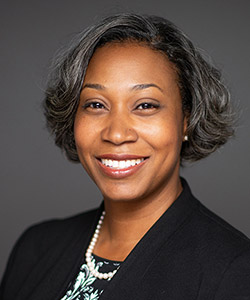
Toya Lawson
Toya Lawson is a Partner with Bridge Partners, an executive search firm with a unique mission to diversify leadership teams. She has twenty years of experience working in retained and contingent search, corporate human resources and talent acquisition environments. Throughout her career, she has recruited candidates at all levels from administrative support professionals to CEOs and executive team members across a variety of industries. Her clients view her as a trusted advisor, her relationships with candidates are long-term, and she prides herself on always ensuring that her searches and shortlists are diverse and inclusive.

Natalie Levkovich
Natalie Levkovich has held the position of CEO of the Health Federation of Philadelphia since 1987, and served as director of program development for three years prior to that. During this tenure, she has led a number of notable, community-oriented, collaborative public health initiatives, and has overseen the organization’s growth from a budget of approximately $200,000 to more than $40 million. Natalie is assisted by a highly qualified senior management team.

José Rodriguez
José Rodriguez joined the Health Federation of Philadelphia in 2021 as Sr. Director for Diversity, Equity and Inclusion. Prior to this role he held several JDEI leadership roles at the Pennsylvania State University and Cabrini College. José brings a wealth of experience in advancing diversity, equity, and inclusion in multiple settings, and has more than 25 years of experience in the field as a JDEI professional trainer, facilitator and coach. He is a primary champion for creating and promoting opportunities for dialogue toward an understanding of diversity, equity and inclusion; and is building a comprehensive JDEI program both internally at the Health Federation and within its network of member health centers. José holds a Bachelor of Arts from Allegheny College and a MS in Higher Education from the University of Pennsylvania.
For more than two decades Profiles in Diversity Journal has showcased and honored individuals who have blazed new trails, led the way, mentored others, advanced diversity and inclusion in the workplace and the community, and excelled in their chosen fields. PDJ is proud to recognize Black Leaders with our third Black Leadership Awards.
The 53 profiles that appear in this issue recognize and celebrate the achievements of our third group of Black Leaders. Each award recipient has also provided us with the answers to some questions and an essay that will give you, our readers, the chance to get to know these trailblazing individuals a little better.
Welcome to PDJ’s third annual Black Leadership Awards.
2022 Black Leadership Award Winners
- AARP – Shani W. Hosten – Vice President, Audience Strategy–Office of Diversity, Equity & Inclusion
- Abbott – Karl E. Analo – Counsel, Labor & Employment Counseling and Litigation
- AMD (Advanced Micro Devices Inc.) – Dr. Pierre Maillard – Radiation Effects & RAS Architect
- AMD (Advanced Micro Devices Inc.) – Mark Wadlington – Senior Vice President and General Manager, Core Markets Group – AECG, Advanced Micro Devices, Inc.
- Akin Gump Strauss Hauer & Feld LLP – Terence Rozier-Byrd – Partner
- Akin Gump Strauss Hauer & Feld LLP – Tiffanye Threadcraft – Counsel
- Axinn Veltrop & Harkrider LLP – Leslie C. Overton – Partner and Chief Diversity, Equity & Inclusion Officer
- Corteva Agriscience – Cheryl H. Curbeam – Vice President, Chief Risk and Compliance Officer
- Corteva Agriscience – Karis Gutter – Vice President, Government & Industry Affairs, North America
- Coston Consulting – Michael Coston – Chief Executive Officer
- Crimson Wealth Strategies LLC – Chauvon L. McFadden – Principal
- Davis Wright Tremaine LLP – Christopher D. Ford – Partner
- DiCello Levitt – Diandra “Fu” Debrosse Zimmermann – Managing Partner, Birmingham and Co-Chair, Mass Torts – DiCello Levitt
- Enact Mortgage Insurance – Dina Fleurima – Senior Manager, Lender Services
- Freddie Mac – Tinesha C. Richardson – Equitable Housing Manager
- Givelify – Wale Mafolasire – Founder and CEO
- Harman International Industries, Incorporated – Fred Owens – Vice President, Global Intellectual Property
- Heartbeat – Christopher Cocking – Vice President, Solutions Architect
- Kasowitz Benson Torres LLP – Nefertiti J. Alexander – Partner
- Latham & Watkins – Sarah Fortt – Partner
- Latham & Watkins – David Ziyambi – Partner
- Levain Bakery – Kutina Ruhumbika – Chief People Officer
- LexShares – Cayse Llorens – CEO
- Mayer Brown LLP – Jeremiah A. DeBerry – Partner and the Director of Diversity & Inclusion at Mayer Brown
- Moss Adams – Shaunté Kinch – Consulting Director
- Nelson Mullins – Kraig B. Long – Partner
- Nelson Mullins Riley & Scarborough LLP – Alicia N. Ritchie – Partner
- New American Funding – Kenol Cadet – Sales Manager
- New American Funding – Albert “AJ” Nunnally, III – Branch Manager
- New American Funding – Ken Smith – Sales Manager
- New American Funding – Micheline St. Fleur – Sr. Loan Originator
- New American Funding – Wonida Welch – Branch Manager
- New York Life – Martin King – Managing Director, NYL Investors LLC
- NorthEast Electrical – Deshawn Fentress – Director of Project Management
- Norton Rose Fulbright – Vincent Dunn – Co-Partner-in-Charge, New York
- Novavax, Inc – Talitha Hampton, PhD – Senior Director, Supply Chain Production Planning & Systems
- Partnership for Inclusion Leadership – Youlanda Gibbons – CEO and Founder
- Patterson Belknap Webb & Tyler LLP – H. Gregory Baker – Partner
- Patterson Belknap Webb & Tyler LLP – Peter C. Harvey – Partner
- Point32Health – Cain A. Hayes – President and CEO
- REVOLT – Detavio Samuels – Chief Executive Officer
- RWJ Barnabas Health – Suzette Robinson, MHA – Vice President of Diversity and Inclusion
- Saxena White – Omar D. Davis – Special Counsel
- Sonepar USA – Ron Harper – SVP Supply Chain & Logistics
- Strativia – Kenneth Kelly – President & CEO
- Sullivan & Cromwell LLP – Kamil R. Shields – Partner
- Texas Tech University Health Sciences Center El Paso, Paul L. Foster School of Medicine – Charmaine A. Martin, M.D. – Interim Associate Dean Student Affairs, FSOM, Associate Professor, Department of Family and Community Medicine
- Union Pacific Railroad – Kenny Rocker – Executive Vice President – Marketing and Sales
- Webster Bank – John L Guy Jr. – EVP, Director Business Banking
- WilmerHale – Monya M. Bunch, Esq. – Director, Diversity Equity and Inclusion
- WilmerHale – Peggy Otum – Chair, Energy, Environment and Natural Resources Practice; Partner
- Wind River – Kevin Dallas – President and Chief Executive Officer
- Withum – Adrienne Smith, PMP, ITIL – Assistant vCIO & Project Manager
- WithumSmith+Brown, PC – Jasmina Woodson, CPA/ABV/CFF – Manager, Forensic Valuation Services