Company: WellCare Health Plans, Inc.
Innovation: Partnering with Tampa Bay-based Disability Training Center
Award Recognition: Honorable Mention
WellCare Health Plans, Inc. created its HealthConnections Diversity & Inclusion program in 2011, with the goals of strengthening WellCare’s connectivity with its ethnically and culturally diverse communities; improving the representation of ethnicities and cultures among its workforce; and establishing a network of diversity champions within the company and the communities it serves.
WellCare also created a Community Advocacy program in 2011. The program is currently working with the Center for Accessible Living in Kentucky on a community liaison initiative to recruit and hire individuals with disabilities to identify and catalog community-based social service and public assistance programs in the state.
“Our future success depends largely on our ability to build a high-quality workforce that reflects the communities in which we operate,” said Larry Anderson, senior vice president and chief human resources officer for WellCare. “To that end, we look forward to a mutually beneficial relationship with MTC.”
In 2013, WellCare expanded its workforce development initiative to Florida’s Tampa Bay area through a partnership with the MacDonald Training Center (MTC). MTC has provided innovative employment services for more than thirty years, during which it has trained and placed thousands of individuals with physical and intellectual challenges into successful employment throughout the community. MTC offers a life and job skills training curriculum, community-based residential supports, and competitive employment placement services.
Together, the organizations are identifying opportunities for WellCare to expand its workforce diversity and further MTC’s mission. WellCare and MTC aim to promote self-sufficiency and community integration for people with disabilities, including military veterans. To launch the partnership, the WellCare Community Foundation donated $50,000 to help the training center provide educational, vocational, and residential support services for people with disabilities.
WellCare plans to implement its workforce diversity goals through a two-phase approach. During the first phase, MTC will assemble an advisory council to conduct research and compile best practice recommendations for WellCare. During the second phase, the advisory council will help WellCare implement workforce expansion and diversification, as well as provide ongoing support.
“MTC is proud to partner with WellCare on this commendable initiative,” said Jim Freyvogel, president and CEO of MTC. “Working together to fully diversify a major corporation is an exciting opportunity that will positively impact the lives of many people who live in the Tampa Bay area, including many with disabilities.”
Company: William Osler Health System
Innovation: Diversity Change Champions: Creating a Tipping Point
Award Recognition: Honorable Mention
William Osler Health System’s namesake, Dr. William Osler, once said “It’s much more important to know what sort of a patient has a disease than what sort of a disease the patient has.” This is challenging when patients are significantly ‘diverse’ (Osler’s community has the second highest number of immigrants in Canada) with differing practices and service expectations, health care professionals’ training is more focused on ‘clinical care’, and there is a significant number of staff, physicians, and volunteers to reach for introducing change (over 6,750 at Osler).
Osler’s goal was to recruit and engage change champions to create an environment where all value equity and access to quality and holistic patient-inspired care, and for a healthier workplace regardless of one’s ‘diversity’.
Equipped with diversity education, tools, and resources for dissemination and ensuring that ‘diversity’ is a regular conversation item, the multidisciplinary champions have created a ‘tipping point’ across Osler through innovative initiatives and integration.
They contributed to Osler’s Canada’s Best Diversity Employers Award 2013 and to Canada’s first Diversity Charter. As President and CEO Matthew Anderson said when signing the Charter, “Even when diversity is in your DNA it needs help and support. It is embedded in our clinical services, our human resource policies, and our workplace culture.”
The clinical/ non-clinical champions have grown from twenty-five in 2009 to one hundred, and range from front-line staff to directors. From one initiative there are now at least fifty.
Examples include: palliative care, in which Osler initiated a pilot connecting palliative patients with families abroad through technology; pharmacy, Osler reduced risks/barriers to communication and increased pharmacists’ understanding of patients; self-management program and the diabetes clinic: services delivered to patients in external community ‘clinics’ using a health equity lens; diagnostic imaging, initiated the use of portable phones for accurate interpretation; women/children’s, in which diversity resources were disseminated to clinical staff to promote more inclusive approaches to patient care; and decision support, in which patient data was collected analyzed from a diversity lens.
In the words of Nyla Chattergoon, Osler’s Decision Support Change Champion, “By understanding the perspective of others, we are able to develop compassion and understanding of others’ circumstances allowing us to view patients as unique individuals … not a diagnosis.”
BY ALANNA KLAPP
Universities are places where people from different backgrounds and viewpoints are constantly engaged in discussion. For that reason, free speech legal issues often arise. Additionally, the advent of the internet has opened up a new dimension of problems, among them academic freedom for faculty and students, freedom of association, and the blurring of the line between free speech and hate speech. These matters all impact diversity in positive and negative ways.
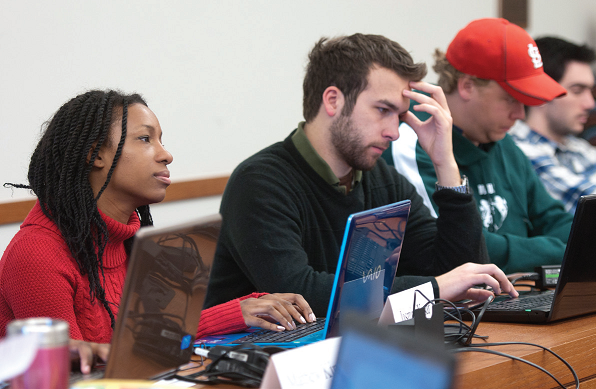
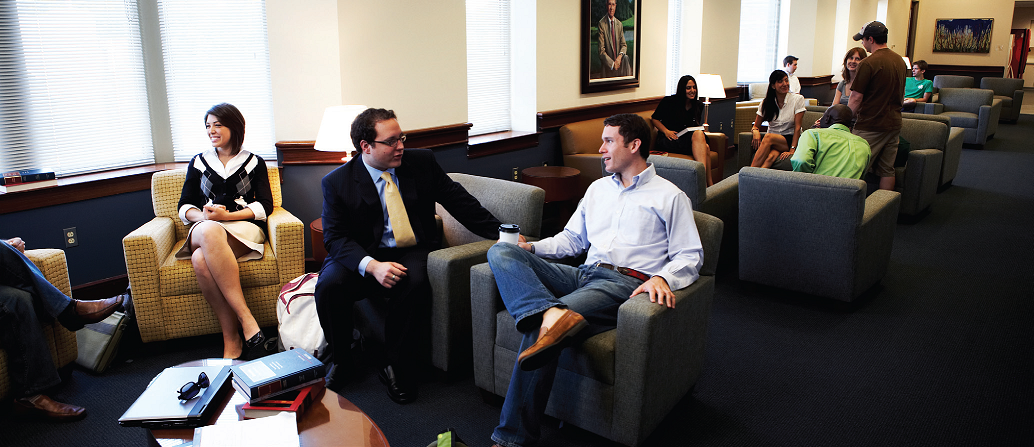
Students in the classroom at Washington University in St. Louis learn about topics such as free speech.
The internet on campus brings about technology-related free speech concerns. Registered Patent Attorney Steve Grant says the internet makes it easier to write hurtful words anonymously one wouldn’t otherwise say in person. Universities also have to be prudent about student usage of computer facilities and online resources for allocation purposes and content, such as questionable websites.
Another common free speech issue on campus concerns academic freedom among faculty and students. For example, a professor may take a controversial political or religious stand and be denied tenure. The professor then complains about the denial because of political or religious views. “In a sense that’s almost the basis of some free speech questions,” says Greg Magarian, professor of Law at Washington University in St. Louis. “Are we regulating what the people in the university community can do based on their ideas?” Universities have to be careful to uphold the First Amendment for both students and faculty who express their ideas, even if those ideas aren’t considered politically correct.
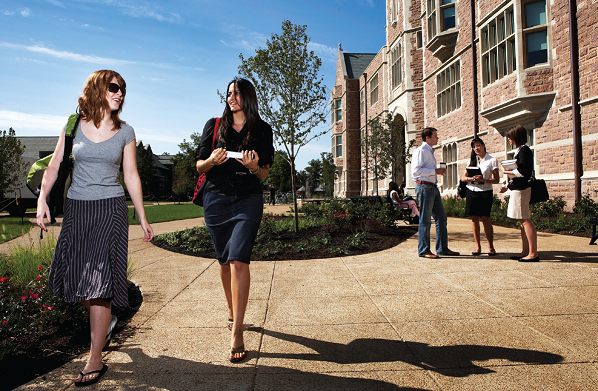
Students stroll the campus of Washington University
in St. Louis.
Freedom of association is another hot topic within the realm of free speech. If a chapter of the Christian Legal Society bans gay members and a public university responds by withholding sponsorship, does the university have an obligation to treat all student organizations the same way? This was the question posed to the Supreme Court in 2010 in the case of Christian Legal Society v. Martinez. The Court ruled in favor of the defendant, requiring university student groups to accept anyone from the student body as a member.
The line between free speech and hate speech is a more complicated matter. The term “hate speech” is not an actual legal term, rather it is a phrase used to talk about society. “I have a difficult time defining almost anything as hate speech,” says Grant. “If somebody can’t say something, they end up releasing that anger another way, like getting a gun. A lot of what’s said in a hate speech perspective shouldn’t be said if it’s not courteous speech, but it kind of goes back to ‘sticks and stones may break my bones but words will never hurt me.’ They are just words,” he adds.
There are some caveats that fall into the category of hate speech, such as “fighting words.” If one person walks up to another and starts to scream insults about that person’s race, gender, or family, and incites a forceful reaction, it is not protected by the First Amendment. “It’s sort of a tricky idea, but the underlying theory has something to do with the notion that we don’t want people to provoke violent confrontations,” says Magarian. “Maybe more of a serious and important category when it comes to the idea of hate speech is that the First Amendment doesn’t protect threats a reasonable person would believe to be serious.” In other words, speech that makes others fear for their safety can be restricted.
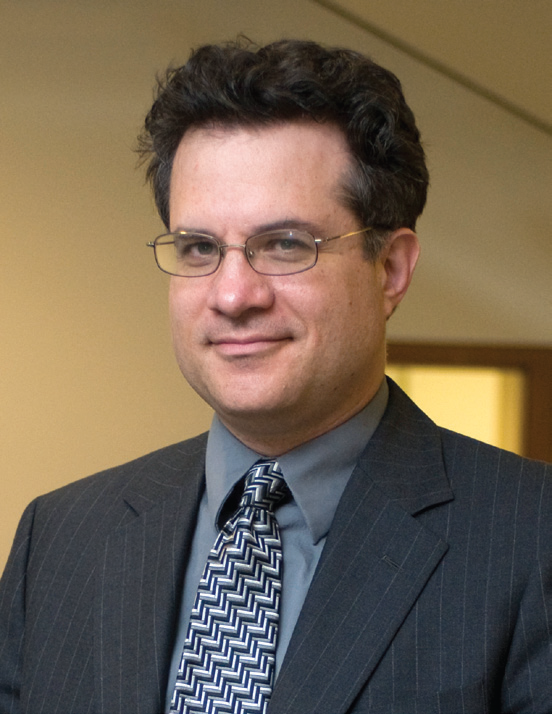
Greg Magarian is a professor of Law at Washington University in St. Louis.
“I think that theory is pretty sound, the idea that nothing about the First Amendment is supposed to allow someone to intimidate someone else through language,” he adds. In other words, fighting words and threats are exceptions, but otherwise hateful speech can’t be regulated on campus without violating free expression.
How do the legalities of free speech in higher education affect diversity? “There are a few different angles on this,” Magarian says. “Universities, public universities in particular, which are bound by Constitutional protection, have to respect free speech, and they have to honor the First Amendment. Then it gets down to what kind of diversity we’re talking about, and what the mechanisms are for promoting diversity. Hopefully free speech protections promote diversity of ideas, and encourage students with a variety of perspectives to speak out and participate in campus life.”
Protections like speech codes can have an undermining impact on diversity if students become intimidated or disaffected.
“That’s a concern I think university administrators need to be aware of. If we allow speech that is critical or derisive of people’s identities, then it’s going to discourage those people from participating in discourse, discussion, and activities on campus,” he adds.
What can administrators do in these types of situations?
“I think universities, generally speaking, care about the bottom line, that everybody is involved, and everybody is citizens of the institution and actively engaged,” Magarian says. If free speech protections undercut diversity efforts, Magarian recommends university officials compensate by turning problems into teachable moments. “Have more discussion and dialogue around the problems of identifying critical speech,” he says. “Institutions can hit back against the speech they find offensive or counterproductive without punishing the speaker.”
Universities can organize opportunities for minority students to have outlets to function as groups as well as encouraging discourse and communication among different organizations. One of the most important things universities can do is make clear the institution’s commitment to diversity in everything they do and the way they function. Students and faculty are free to say and think what they want while knowing the institution supports diversity.
By Grace Austin
Barefoot & Pregnant made a name for itself by capitalizing on the prenatal market. The company is celebrating their tenth anniversary this fall.
Founded in 2003, Barefoot & Pregnant prenatal spas were the first of its kind. Since then, the spa has expanded to a hotel spa partner, and now with Belly Friendly, an online guide for pregnancy-friendly spas for expectant mothers.
Barefoot & Pregnant initially grew out of founder Stacy Denny’s experiences with pregnant friends and family. Denny’s background was originally in marketing, but she had always been interested in pregnancy. Denny felt women should embrace their pregnancies rather than hiding them.
“I was giving advice to one based on a conversation with another. I realized there was no community built around pregnancy. Through that, I realized there were all these services that expectant moms needed but they were all kind of afterthoughts in the marketplace,” says Denny.
She wanted to create a spa that would not only be safe to moms’ unborn babies, but would be aware of what they were going through and the specific modifications they needed. Incorporating fitness that was healthy and safe for expectant mothers was also important.
Belly Friendly, Denny’s newest venture, was launched in early 2012. Since then, twenty-two spas have become “Belly Friendly,” meaning they received a pregnancy-friendly approval through the Belly Friendly team. The Belly Friendly designation means spas are educated on prenatal health and have experience with certain equipment and services like safe manicures and pedicures, prenatal massage, and facials for expectant moms. Safe products also need to be utilized.
Hair services and fitness facilities are also available at some Belly Friendly salons.
Belly Friendly locations are now open in California, Colorado, Maryland, New York, and Texas.
Denny hopes to take the company beyond the spa industry. She would like to expand Belly Friendly to every service that is offered to expectant moms, including hospitals and OB/GYNs.
“We want to make sure that as a company, if you want to cater to this growing market—there are 16,000 pregnant women that enter the market every day—you are doing the right things,” says Denny. “We also want to educate consumers that there are differences and they should seek out those companies and service providers that are really catering to their needs.”
Robert Coleman
We spoke with Second Chance Executive Director Robert Coleman, who heads the nonprofit designed to help find work for the “hardest to serve”—the formerly homeless, those with a criminal history, health issues, suffer from addiction, or are right out of school. Based in San Diego, California, Second Chance is now in its twentieth year helping provide job readiness training, educating and supporting people to get back into the workforce.
Q. Tell me more about your organization.
We know that giving someone a job leads to so many other things that they can stabilize in their life, whether that’s housing, getting back their children, or maybe issues of self-esteem. If we can help people get back to work, then they have a chance of a future they yearn for. Many know it’s what they want, but to date they’ve been unsuccessful. There are many reasons why people will find themselves at Second Chance, but their destination is the same.
At Second Chance, if people present themselves as homeless, we have accommodations. If they have addiction, typically relationships around them have been damaged completely. So if that’s a hurdle, we have an in-house mental health team to help. If one does not have the clothes for an interview, we have a vast quantity of new clothing to choose from. What we try to do is remove the excuses and reasons why someone can be unsuccessful. Then it comes down to one’s behavior and attitudes towards getting back to work.
Q. How does the organization give second chances to people who need them?
We provide four weeks of training, and at the end, if one graduates, we support one for the next two years. Employers hire because of one’s attitude; that is something one has to come with. So the first two weeks focus on people’s attitude and behavior. For some of these people that have had years of incarceration, their ways of communicating and acknowledging people is not going to help them in society or to a future employer. We teach them how to walk up to someone, smile at them, and shake their hand. We start from that basic interaction of how to introduce one’s self. The second week is teaching them how to use a computer, Word, Excel, the internet, and how to construct a résumé and set up an email address.
Q. What kind of jobs do people get placed into?
From 2003 to mid-2012, we placed 3,700 people back into employment, with an average staffing wage of $10.05. The majority of those went into sales and related jobs; food preparation and related jobs; office and administration support; installations, maintenance, and repair; construction; transportation and material moving; and building and grounds cleaning and maintenance. We have a lot of relationships with many different employers, and employers often come to us with vacancies. We then place the right people into those vacancies.
Q. How do people in need get connected to you?
We have a small number of people in every class that were sent to us by the court. A vast majority find out through word of mouth, through family, friends, parole officers, and counselors.
Q. How do people get involved in the program if they would like to help?
There are many ways people can help at Second Chance. One of the things we do at the end of the four weeks is to conduct mock interviews. We always need volunteers to help conduct these. One could also help teach those without good literacy skills. We also have our own board of directors, another way to get involved.
Keeton
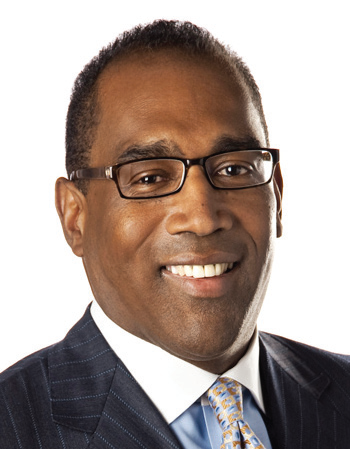
By Fred Keeton, Vice President of External Affairs and Chief Diversity Officer, Caesars Entertainment
Comprised of nearly 70,000 employees with different backgrounds and individual health needs across the world, Caesars Entertainment is striving to arm employees with the tools to retain and improve good health. Each eligible participating employee and spouse or domestic partner undergoes a biometric screening, an annual physical, and a consultation with an on-site nurse or coach who recommends behavioral changes that can lead to improved health.
The on-site wellnurse or coach also helps participants stay on track with their health improvement programs. Individuals deemed at high risk for disease based on chronic symptoms are assigned a personalized plan. When you learn you have a condition, you are more likely to take care of it if you have someone to help you along the way.
According to the American Diabetes Association, “compared to the general population, African Americans and Latinos are disproportionately affected by diabetes.” By regularly partnering with employees to monitor for diseases that are prevalent in minorities such as diabetes, heart disease, and hypertension, Caesars is better educating colleagues about healthy eating, predisposed conditions, symptoms, and disease management. In turn, these efforts help to reduce the health disparities affecting minorities in our operating communities and among employees and their families.
Caesars is currently expanding its program to provide additional materials that will help employees make informed decisions about their health; offer coordinated care among doctors, specialists, and hospitals; help employees become better-educated healthcare consumers; and provide ‘bonus rewards’ to employees who meet their health goals.
When employees adjust their behaviors to live healthier lives, they experience a better quality of living. We know if we have happy and healthy employees, they’ll have enriched careers and take good care of our guests.
Caesars Entertainment also supports its communities by contributing to organizations such as Community Partners for Better Health, a minority health organization focused on health awareness programs, and Positively Kids, which provides healthcare services for medically fragile, medically dependent, and/or developmentally delayed children age birth to eighteen years and their families. Collectively these program impact more than 10,000 people a year in Southern Nevada.
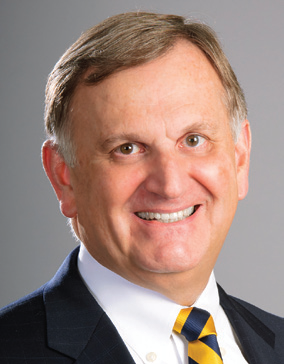
By Wayne N. Burton, Chief Medical Officer, American Express
Burton
Health is not one size fits all. We recognize our workforce is increasingly diverse and work to ensure the health needs of all American Express employees are being met.
Using a data-driven approach is important to understand how to better serve employees. Awareness of health disparities in minority groups is growing globally, but employers rarely have access to data specifically related to health disparities for their employee population. That’s why we partnered with the University of Michigan in 2010 to create an integrated data warehouse to better understand healthcare gaps among employees and create tailored health programs to address them.
To create this data warehouse, employees were asked to complete a brief health risk questionnaire (HRQ) in exchange for a contribution to their health savings account. The University of Michigan linked responses from the HRQ with employee ethnicity/race information to identify any healthcare gaps. Employee confidentiality is preserved by receiving only aggregated, summary reports.
This analytic approach has driven new programs and resources for American Express’ corporate wellness program, Healthy Living, benefiting all employees. As a result, health risk factors in the majority of areas have improved for all ethnicities.
Healthy Living is about building employee-centric programs and communications to inspire and drive individual health progress. Partnerships have been forged with employee-formed diversity networks to provide education and to encourage participation. When a pilot health program was launched on the risk factors for heart disease in African American employees, the Black Employee Network (BEN) was eager to help enroll their members. And when a diabetes education program was rolled out company-wide, the Hispanic Origin & Latin-American Network (HOLA) emphasized participation to its members after health risks were identified among this population.
We are a service company, and great service starts with the people who deliver it. American Express understands that healthy, happy employees are critical to the success of the company. Creating a culture where health is important is a priority. We will continue to invest in providing all employees with the tools and resources necessary to improve their health and the quality of their everyday life.
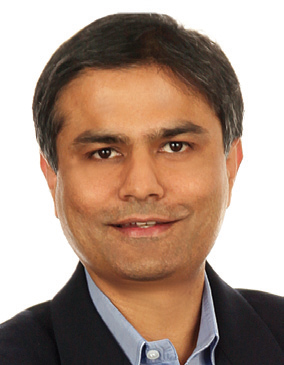
By Saurabh Tripathi, CFO, Surgery, GE Healthcare and Raj Thakkar, General Manager, Sourcing, GE Energy Management
Thakkar
Tripathi
GE HAS ALWAYS considered cultivating diversity in the workplace as a competitive advantage. Diversity is about the power of the mix—the strength that results from a team with varied experiences, backgrounds, and styles. As a global company, talent must reflect the communities served and with whom we do business. In order to have healthy and productive employees, it is important to focus on the physical and emotional well-being of employees.
Medical and scientific research has proven that many of the physical and emotional health issues of minorities are different from the broader population because of their ethnicity, gender, race, country of origin, or other geographical and social reasons. It is no secret that early upbringing; social and cultural environment; and racial, gender, and ethnic make-up have a huge impact on physical as well as emotional persona. Therefore, GE has decided to focus efforts on addressing some of the health issues pertinent to the minority population through its Affinity Networks and Employee Groups: APAF (Asian Pacific American Forum), AAF (African American Forum), HF (Hispanic Forum), WN (Women’s Network), VN (Veterans Network), and GLBTA Alliance (Gay, Lesbian, Bisexual, Transgender, and Allies Alliance).
In most of these diversity forums, we invite leading medical luminaries in specified health issues that are more prevalent to the specific diversity group, for example, hypertension and diabetes for the Asian Pacific population, prostate cancers for African Americans, and heart health for the GE Women’s Network. Employees are encouraged to participate in these forums. Periodic webinars/workshops are also held, where these experts address a wider range of audience and answer their questions. In addition to these workshops, GE Affinity Networks and Employee Groups hold periodic camps for blood screening, hypertension/diabetes check-ups, pain management clinics, bone marrow donation, and more at different company sites. We collect periodic employee feedback to determine which areas of health issues are most important and relevant for minority groups before laying out the initiatives to tackle those issues.
GE launched a global program of health and well-being in October 2009 called HealthAhead. The Affinity Networks and Employee Groups initiate and encourage employee participation in various HealthAhead events, such as weight loss challenges, million steps competition, and yoga sessions.
GE’s Affinity Networks and Employee Groups have grown significantly over the past several years and we have realized that it is important to address social, emotional, and health issues of our workforce to bring the best out in employees. As Chairman Jeff Immelt puts it, “Employees are our most valuable assets,” and the HealthAhead initiatives strive to keep this most valuable asset in the best shape possible.
By Dr. Taffye Benson Clayton, Vice Provost for Diversity and Multicultural Affairs and Chief Diversity Officer, The University of North Carolina at Chapel Hill
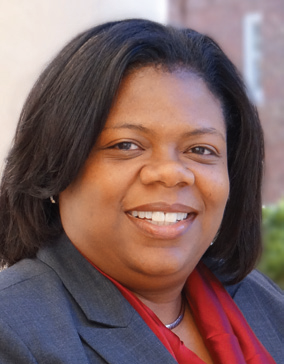
CDO Clayton
THE STATISTICS ON minority health are compelling, forcing us to question why such disparities exist. At the University of North Carolina at Chapel Hill we are working not only to discover what would make the healthcare of minority populations more effective but what would make them equitable. This summer we will hold our nineteenth annual Minority Health Conference. As an advocate for evidence-based approaches, I appreciate the stories the numbers can tell us. We can use research to affect a change in policy, and therefore, in our society.
If we examine issues in healthcare through a social justice lens, we can inform policymakers not just where the disparities are, but how to contend with them. Research on bias in the health and mental health systems has had an impact in helping to eradicate bias and the disparities caused by it.
Prompted by a request from Congress, the Institute of Medicine performed an assessment on the differences in the kinds and quality of healthcare based on racial and ethnic categories. Their recommendations included:
• Implementation of patient education
programs
• Collection of data on healthcare access
and utilization by patients’ race,
ethnicity, and socioeconomic status
• Research into sources of racial and ethnic disparities,
barriers to eliminating disparities, and promising
intervention strategies to eliminate disparities
Our latest news headlines regarding health are about our country’s battle with obesity and how to bring down the rate of illness related to it. Access to healthy food and information on nutrition are essential if we’re going to address this issue broadly. Technology has had an impact on how people get information—from television to text message. We can see changes being made that have even affected the fast-food industry.
We should be steadfast in our efforts to keep minority health issues at the forefront of public information in order to achieve a goal of equity for health and healthcare.
By Dr. Christopher Butts, Vice President, K. Parks Consulting, Inc.
At K. Parks Consulting, Inc. we know the ability of workforces to produce their best work is in large part dependent on their level of health. Our efforts seek to yield a culture of diversity that fosters the inclusion of every member. Without this business imperative strategy, many members of the workforce experience high levels of stress and tension, which may be reflected in a decline in their work productivity as well as increased healthcare costs to the organization.
Higher levels of workplace stress have been correlated to increases in coronary heart disease and difficulty in managing diabetes; these are both risk factors which are more prevalent in minorities, especially African Americans. In order to further minority health efforts, we utilize the business case for diversity and identify strengthening affinity groups to enhance physical and mental health efforts.
According to a 2011 survey conducted by the American Psychological Association, 39 percent of adults surveyed reported their stress levels increasing and more than half of all surveyed reported personal health problems as a source of stress. We are said to spend more hours awake at work than at home, so it is important to our health that we work in a stress-free or as stress-free as possible of an environment.
Minority health is important to everyone as the nation continues to see an increase in the growth of minority groups. Furthermore, minorities make up nearly one-third of the labor force. It is important to all industries to continue to increase their diversity efforts, as the environment they foster impacts the health of their workforce and their ability to produce at their highest level.
In a recent meeting with a client we were asked why is it important for their company to embrace diversity. We compared the regional demographics with the number of minority individuals who were qualified for current vacant positions at the company, and found a disparity in the number of qualified minorities who applied for the positions. We further explored the absenteeism of those currently employed and found the highest levels were those from a minority group. Lastly, we identified the cost associated with recruiting and training new employees over the past five years versus recommended continuing education efforts to retain quality employees.
At the end of the meeting we had the backing of the executive team to move forward with continued efforts to increase their diversity and inclusion efforts in order to foster an environment that would reduce absenteeism, turnover, and increase the diversity of their recruitment pool. Health efforts are not just the benefits we receive, but more importantly the environment fostered to allow us to work at our highest potential. Stress doesn’t leave when you walk out of the door, it follows you home.