by Marilyn Nagel
Chief Diversity Officer
Cisco
Attracting, retaining, and developing a diverse workforce is a top priority for Cisco, an organization that employs 72,600 people in more than 90 countries. At Cisco, we are focused on creating an inclusive culture that maximizes the contributions of our vast workforce, and helps ensure we have the creative, collaborative environment we need to support our globalization strategy.
Employee Resource Groups (ERGs) are one way that we engage our employees to help them achieve both individual and business goals. These groups bring employees from different backgrounds, cultures, and experiences together, often using Cisco communication and collaboration technologies, to develop their business understanding, skills, and networks. We encourage our ERGs to use their resources to find new ways to foster innovation, uncover market needs, and explore areas of potential growth.
ERGs have had a big impact across our organization. Many employees have told us their ERGs helped them develop leadership skills and gave them a way to make a difference outside their regular day-to-day jobs. From a business standpoint, we have seen these groups create meaningful dialogues that have led to business opportunities, where our unique understanding gives us a competitive advantage and increases profits.
“Many employees have told us their ERGs helped them develop leadership skills and gave them a way to make a difference outside their regular day-to-day jobs.”
We wanted to identify a way to help ensure that these benefits were repeatable. With different ERGs doing different things for different results, we needed to gain insight into their true effectiveness. We needed our ERGs to achieve accountability and consistency, but without sacrificing their unique value. With these factors in mind, we developed an ERG progression model that each group could use to assess itself, its work, and its organizational evolution. This model creates a framework that applies structure, governance, and leadership to our ERGs, yet preserves their autonomy through benchmarks, best practices, and processes that increase competencies within each group.
Since introducing this progression model, we have seen our ERGs measure return on their investments, increase their positive impact on the business, and be recognized for their contributions. For example, they now have the structure and technology needed to communicate their strategic goals and achievements to multiple audiences. This small change immediately increased their influence and widened their scope, allowing them to support, in a more formal way, the organization’s access to localized information and understanding of related markets.
ERGs are fast becoming a market-savvy organizational resource that will help us remain competitive in the global economy. Our progression model gives our ERGs a predictable way forward; one that unites them, so they can inspire us to value our differences and succeed.

Marilyn Nagel
Chief Diversity Officer
Cisco
Cisco’s Chief Diversity Officer, is responsible for facilitating the global Inclusion & Diversity (I&D) board, which sets the I&D strategy for Cisco® (www.cisco.com). She also develops the I&D strategic plan and is continually looking for ways to help Cisco stay innovative, by driving policy changes to create a more inclusive environment. Ms. Nagel has worked in academia, leadership and organizational development for nearly 30 years, holds several master’s degrees and serves on non-profit boards.
by Brenda J. Mullins
2nd Vice President of Human Resources and Chief Diversity Officer
Aflac
Quick, define corporate diversity. Is it an occasional press release about the ethnic composition of the company’s workforce? Is it a tabulation of key demographics – how many women, African Americans or Hispanics work for the company? Sadly, for too many American corporations, diversity breaks down to numbers, when what it really is, is a business strategy.
These benchmarks are important. Over my 24 years at Aflac, I have learned that it is impossible to achieve functional diversity without prioritizing varied backgrounds and experiences. A company that ignores the demographics of the marketplace denies itself the chance to be everything it can be. But diversity can’t end there. Young people coming into the field or those who want to refresh their thinking should consider that diversity is part of the overall equation to maximize business success. It wears many hats, one of which that is often under-considered: generational diversity.
“The ultimate goal of diversity – how it should be defined – is not only by the numbers but in how diversity expands the range of thought, which requires more than just conventional thinking.”
In a 2008 study conducted by the Chartered Institute of Personnel and Development, the U.K. think tank discusses the business case for prioritizing generational diversity, suggesting that it will lead to broader talent pools from which to recruit while increasing creativity and innovation fostered from generational interaction. Further, the risk of not managing this type of diversity can be misunderstandings between members of the workforce, leading to conflict and disengagement.
At my company, we view diversity not only by how our workforce reflects the community but also by how we relate to the way consumers of all backgrounds and generations think. We’ve made a conscious effort to expand our platforms to prioritize issues beyond traditional diversity toward diversity of thought. Whether scouring top universities for candidates of eclectic skill sets or participating in Students in Free Enterprise (SIFE), a college recruitment program that provides high-potential students with assorted backgrounds to companies interested in expanding their talent pool, our recruiters focus not only on seasoned job-seekers, but also young people, who today bring more immediate relevance to the table than ever before.
According to a recent Pew Research Center study, the face of America is changing with the new millennial generation. They are more ethnically and racially diverse, more educated than previous generations and much more likely to engage in various social media as forms of expression than any previous age group. So what does this mean for diversity officers? It means ignore generational diversity and you risk being ignorant of what matters to a large market segment that is more powerful than in previous decades.
Certainly the importance of racial, ethnic and cultural diversity maintains its significance in corporate America, but the ultimate goal of diversity – how it should be defined – is not only by the numbers but in how diversity expands the range of thought, which requires more than just conventional thinking.
This article has been sponsored by:
Women Worth Watching
Brenda J. Mullins is 2nd Vice President of Human Resources and Chief Diversity Officer at Aflac, the nation’s number one provider of voluntary health care benefits.
By Tisa Jackson
Vice President of Diversity and Inclusion, Union Bank, N.A
Dr. Martin Luther King, Jr., said: “Life’s most persistent and urgent question is: What are you doing for others? Do not say you will do it ‘someday,’ now is the time. Do not say ‘someone’ will do it, you are the one…”
These words echo a familiar theme for diversity professionals, because we enter this work with a commitment to doing everything we can to achieve equity for all people.
Achieving progress is more challenging in this global economic climate. Recent financial strains have resulted in some companies cutting or reducing their diversity and inclusion teams. But the economic downturn offers some surprising opportunities, and forward-thinking executives recognize new business potential in that their clients and customers are more diverse. The following recommendations can help you lead diversity and inclusion transformation.
Change your mindset. Diversity and inclusion is much more than a program; it is a cultural change process comprised of programs, processes, policies and initiatives tied to business. Focus on key processes instead of primarily focusing on managing hiring or training programs.
De-specialize your thinking. Diversity and inclusion has continued to expand beyond staffing and human resources. Depending on the industry and project, you may need to think like a marketer, buyer, public relations professional or business development representative in the course of a week. Savor the opportunity to make positive change and embrace the opportunity to de-specialize your thinking.
Challenge conventional wisdom. Evaluate your organization’s needs and act accordingly rather than following the crowd. For example, focus on providing sponsors instead of just mentors to high potential employees. A sponsor can assist in assigning visible projects. A mentor is also important in terms of providing advice and serving as a sounding board, but opening doors to sponsorship can be a viable strategy in engaging executives of all backgrounds in developing diverse talent.
When looking externally, toward customers, suppliers, vendors and candidates, choose partnership over sponsorship. If you merely sponsor an event, the community doesn’t really get to know you. A partner creates a relationship and is actively engaged in organizations as a board member or speaker. You need to be aware of their mission so they can help you with your mission.
Regardless of the economic environment, diversity and inclusion is an opportunity, not a problem. We are responsible for keeping the vision. We must continuously challenge ourselves to lead the expanding scope and needs of diversity and inclusion within the business community.
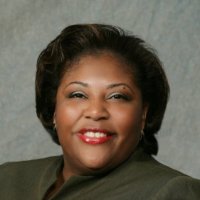
Tisa Jackson
Tisa Jackson, vice president of Diversity and Inclusion for Union Bank, N.A., is founder of the Professional & Technical Diversity Network (PTDN) of greater Los Angeles, a diversity consortium comprised of companies committed to diversity and inclusion. Headquartered in San Francisco, UnionBanCal Corporation is a financial holding company with assets of $79.1 billion at December 31, 2010. Its primary subsidiary, Union Bank, N.A., is a full service commercial bank providing services to individuals, small businesses, middle-market companies, and major corporations. The bank operates 401 banking offices in California, Washington, Oregon and Texas, as well as two international offices.
by Trevor Wilson
Author and Global Human Equity Strategist
TWI Inc.
In Rwanda there are approximately 120,000 murderers waiting to stand trial for massacring a million people in the 1994 genocide. It has been estimated that it would take over 120 years to bring these murderers to trial using the western judicial system. The solution chosen by the new Rwandan government is based on an ancient African concept known in that country as Gacaca.
The system has evolved from communal law enforcement which was traditionally employed to settle village or familial disputes. Not only has this system proven to be a more expeditious method of delivering justice, but it is also designed to promote healing and moving forward from the crisis.
“The great powers of the world may have done wonders in giving the world an industrial and military look, but the great gift still has to come from Africa – giving the world a more human face.” – Steven Biko, 1970, South African freedom fighter
Could this be a more productive way of resolving the traditional differences addressed by diversity programs? Our divisiveness has been highlighted by terms such as white guilt, male privilege and recovering racist. One of the most public examples of the issues we face has been the call by African Americans for reparations due to the injustices of slavery. Could there be a more healing and productive way of solving our problems; a way based on what Aristotle used to call practical wisdom?
When I first visited South Africa in the mid ’90s I heard about the Truth and Reconciliation Commission. As I understood it, the idea was to invite the thousands of people who created and nurtured Apartheid to confess their crimes in exchange for total amnesty. I watched as South Africans of all backgrounds came forward to share the horror of their experience, tell the truth, ask for forgiveness and begin the long process of healing.
In his book No Future without Forgiveness, Archbishop Tutu writes:
Our country opted for a way [which] was consistent with a central African feature that we know in our languages as ubuntu…it speaks of the very essence of being human. We say “my humanity is caught up, is inextricably bound up, in yours.” We say, “A person is a person through other persons.”
This enlightened form of conflict resolution is beginning to appear here in the west. Books are being published on Ubuntu, blockbuster movies like Avatar have borrowed from the Ubuntu language, and even President Obama has reflected the Ubuntu spirit in some of his comments about bridging the racial divide in America.
He has said, “I believe deeply that we cannot solve the challenges of our time unless we solve them together – unless we perfect our union by understanding that we may have different stories, but we hold common hopes; that we may not look the same and we may not have come from the same place, but we all want to move in the same direction.”
Both Gacaca and Ubuntu are concepts based on practical wisdom, which is the combination of knowing the right thing to do with the moral skill to figure out how to do it. This type of wisdom is required whenever we are relating to others, especially in the world of work. This type of wisdom is based on character, virtue and humanness. As Steven Biko says in the opening quote, this is the real gift Africa may contribute to our small global village that has so far been obsessed with economic, political and industrial affairs.
This article has been sponsored by:
TWI Inc.
In 1996 trevor started TWI Inc. to specialize in the area of equity and diversity as a business issue. In the same year, Trevor published a highly acclaimed book titled Diversity at Work: The Business Case for Equity. The firm’s clients include some of the most progressive global employers. TWI’s Human Equity™ approach was instrumental in catapulting Coca-Cola’s South African division to the top performing division worldwide. Visit www.twiinc.com for more information.
by Col. Bart Weiss
Academy Preparatory School Commander
The United States Air Force Academy in Colorado Springs
In the November/December 2009 issue of Profiles in Diversity Journal, Shinder Dhillon writes, “(Diversity) is about getting the right mix of people, with the right mix of skills and competencies.” That has been my vision as a commander at every opportunity I’ve had to command in the Air Force, and it is my vision for the Air Force Academy Preparatory School.
Our diversity grows from our population of cadet candidates with prior service in the Air Force, as well as cadet candidates who come here directly after graduating from high school. Some of the cadet candidates have deployed. Some may know brothers or sisters in arms who never came home. Our priorservice cadet candidates are usually among the first to step into leadership positions, and we capitalize on their experience to develop high school graduates into leaders.
Cadet candidates who come directly from high school may not have the experiences of those with prior service, but they, too, have leadership potential. Anyone who positively stands out will receive recognition and opportunities to achieve greater goals in the service of the Academy and Country.
“Basic training brings them together as a class by forcing them to depend on one another.”
All of our cadet candidates need a little work academically to get them ready for four years at the Academy. The Prep School lifts all participants academically and makes sure those who come from weaker schools or who have been away from academics while deployed are prepared for the rigors of an Academy education.
Part of the reason we conduct basic military training at the Prep School is to build relationships and esprit de corps among the 240 cadet candidates. Basic training brings them together as a class by forcing them to depend on one another.
At the start of the academic year, when cadet candidates no longer have to sit with their flights, they tend to gravitate towards the groups of candidates with whom they most identify: African Americans, Hispanic Americans, football players, basketball players. But because we focus on the concept of brothers and sisters in arms, the dynamic changes within a few months from sitting together based on similarities to sitting together based on shared interests. These shared interests rapidly evolve into forged bonds that transcend ethnic and cultural barriers and make the Prep School an inclusive environment.
At the end of their 10-month stay, our class no longer consists of high school graduates, recruited athletes or prior-enlisted airmen. Instead, they are one team, one class of cadet candidates—Preppies. The inclusion bridge is gapped, measured and seamed within the 10-month timeframe, to begin anew during Basic Cadet Training at the Academy.
This article has been sponsored by:
Communicating Across Cultures
Col. Bartholomew “Bart” Weiss is the commander of the Air Force Academy Preparatory School in Colorado Springs, Colo. He directs a one-year academic, military and athletic program – whose main focus is to prepare young men and women to succeed at the United States Air Force Academy. He is a 1986 graduate of the Air Force Academy and a native of Muskegon, Mich. He holds a Master of Science degree in strategic studies from the Army War College and a Bachelor of Science degree in financial management from the Academy.
by Marie Y. Philippe, PhD
Corporate Vice President, Culture and Organization Effectiveness
The Lifetime Healthcare Companines
At times, in the workplace, there is the belief that champions of diversity and inclusion (D&I) are somewhat limited to particular marginalized groups or confined within the walls of the operation. Nothing is further from the truth. One of the most powerful yet often underutilized weapons in the fight against inequality is our allies—not minority group or LGBT community members, including sometimes even those outside of our organization.
Who are these allies and how do I get them engaged? There is some homework required. However, with due diligence, creativity and willingness to explore new territories, you will find them. For those who have taken this road, positive outcomes have exceeded their expectations.
In your workplace, many from the dominant Euroethnic groups understand the value of differences. Many more have experienced the benefits of having perspectives different from their own. Many are willing and able to speak up to educate those from their own group about the unspoken privilege they enjoy. There is almost instant credibility rather than a process involved in getting the point across from someone “different.”
Whether the heterosexual Caucasian ally is a senior leader or not, there is power in having someone from our own cultural background telling us how they see and value differences. It takes time to uncover such allies because they are often not so visible. Allies can be quiet influencers or may have impressive functional titles which carry built-in followers. Do not underestimate, however, the natural leaders and influencers who can grow to become great champions, if cultivated.
What about the board members? How are you integrating diversity in your board room? If you say “let’s not go there,” then it is time to find an ally to shake it a bit in that board room. Although it is a challenging task, finding an energized, dedicated and consistent champion on the board of directors may have the greatest payoff.
“Champions can also be groomed from the external world and can offer significant and effective support.”
One of the first steps in that direction is the analysis of the board composition. From there, bring forth the data to engage your CEO in a realistic, 21st-century, business-relevant conversation about board diversity. At this juncture, you build your own strategic path. Should you offer to share with the board how the D&I initiative is progressing? Or should you prepare a report for the finance committee about lost opportunities due to a lack of diversity in your markets, suppliers, leadership, etc.? Or should you use the annual report as a conversation starter with someone on the board if you have that level of interaction? You need to think about how you should proceed. Having a board member champion diversity yields high dividends, even if he or she is not from a minority group.
Champions can also be groomed from the external world and can offer significant and effective support. The CEOs of community based organizations, local clergy, local university educators and students who have had a great internship experience can create networks of champions for your D&I initiative.
The relationships you build for community engagement are no different in their process than those you build internally. To identify and groom allies, it is critical to connect as human beings, as different human beings with mutual respect. Champions of diversity must be from a diversity of champions. That is one of the best secrets for success. Go find some allies.
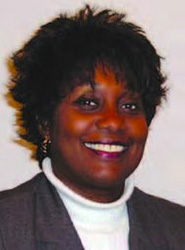
Marie Y. Philippe, Ph.D.
Corporate Vice President, Culture and Organizational Effectiveness
The Lifetime Healthcare Companies
Well known for her leadership contribution in corporate culture transformation through strategic diversity initiatives and organizational change management. She can be reached at [email protected].
by Master Sgt. Steven M. Przyzycki
The USAF Academy Band
The United States Air Force Academy in Colorado Springs
All of us in the Air Force Academy Band take pride in our mission as ambassadors for the Air Force. We deliver the Air Force message through the emotional impact of music. Attracting an audience of greater diversity has proven to be a challenge here is great responsibility in our positions as bandsmen.
There is great responsibility in our positions as bandsmen. For many citizens, our appearances are the only connection they have with the Air Force. History has proven that art, particularly music, is the best vehicle to invoke patriotism and win the trust of the people.
The most effective tool that we can implement to increase diversity is location, location, location! We must bring the music to the people and perform in communities rich in diversity. In most cases, these are also Congressional districts from which we strive to attract cadets. At first, this may result in smaller audiences. However, time will prove to attract a larger, more diverse audience and increase our nationwide appeal. Essentially, everyone wins.
“The most effective tool that we can implement to increase diversity is location, location, location!”
As recently as October 2010, we performed in Nogales, Arizona, only one mile from the national border. The concert featured a selection in which students from the local high school sat in and performed with the band. All of these students were Mexican nationals. This was their first and only opportunity to be in contact with airmen. Coincidentally, a retired Tuskegee Airman was in attendance at this concert.
Our rock band, Blue Steel, travels the country performing with youth orchestras, and they have appeared twice at the Harlem’s Children Zone. We will continue to play in the academy’s high interest areas that are rich in cultural multiplicity. Already, cadet nominations have been submitted from some of these communities. How wonderful it is to perform in these new frontiers. We view our goal to increase diversity as a very welcome opportunity: a chance to perform and tell the Air Force story to new, eager listeners. How privileged we are to embark on this endeavor to change the face of our Air Force!
The United States Air Force Academy Band represents the Air Force Academy, the leading educational institution devel- oping and inspiring air and space leaders of character with a vision for tomorrow.
The band, comprised of 56 active-duty Air Force bandsmen, is dedicated to serving our great nation and representing our future leaders being trained at the Academy. For over 50 years, the United States Air Force Academy Band has used the power of music to inspire Air Force personnel and the nation they serve, produce innovative musical programs and products, and communicate Air Force excellence to millions around the world.
This article has been sponsored by:
Communicating Across Cultures
Master Sergeant Steven M. Przyzycki, percussion, hails from Chicago, Illinois. Steve holds Bachelor and Master of Music degrees in Percussion Performance from Chicago Musical College of Roosevelt University. He joined the band in June 1997 and, in addition to performing with the band, he is also the noncommissioned officer in charge of the band’s public affairs shop.
by Mark Wager
President and CEO
Empire BlueCross BlueShield
I have had the good fortune to live and work in several states. At every stop, I learned more about diversity and the richness it adds to one’s life. But, it wasn’t until I moved to New York, where millions of people live, work, eat, shop and commute shoulder-toshoulder, that I have come to understand why it is known as the “melting pot” of America and how transcendent a concept that is. Empire BlueCross BlueShield is the largest insurer in New York, covering nearly six million people. Our membership includes hundreds of thousands of New Yorkers of African American, Hispanic, Russian, Arab, Italian, Asian, Irish and Native American descent, and many others—a cultural mélange that is fascinating and profound. If Empire didn’t strive to understand our broad marketplace, we wouldn’t be a company that people choose to do business with. Nor would we be a company that attracts top talent. Here are some of the ways we’re incorporating diversity into our business.
Workplace Welcoming to All
We work hard to recruit a diverse staff that reflects our membership demographic. We established a Strategic Diversity Committee that works to champion diversity, and Workplace Diversity and Culture Ambassadors to involve associates in worksite events. Our Community Ambassadors actively relationship-build with leaders and activists in several ethnic communities.
We communicate about diversity. When New Yorkers were worried about a mosque being built near Ground Zero, we talked about the Ramadan celebration and the commonalities of religious faiths. I sent my holiday card out at the beginning of December, acknowledging and honoring not just Christmas, but Chanukah and Kwanzaa, too.
Focus on Our Members’ Needs
We tailor service to cultural dictates. When one of our Haitian members needed hospital care, but couldn’t understand his doctor, we got one of our Creole-speaking associates on the phone to translate. We work to break down communication roadblocks between physicians and our members to improve health outcomes. For example, we have worked with providers on how to improve their communication with our female Asian members, who may be uncomfortable making direct eye contact with a male physician.
We are addressing health disparities. Our Healthy Weigh To Change weight loss program is offered in both English and Spanish, and we’ve seen exceptional results for our Spanish-speaking participants.
Supporting Diversity Efforts in the Community
I sit on the boards of, and we support, dozens of community initiatives that impact New Yorkers’ health status, increase access to key services and help build strong communities, including organizations like:
The Arthur Ashe Institute for Urban Health, which aims to reduce morbidity and mortality by increasing healthcare provider diversity.
Union Settlement, which improves the lives and health of lowincome and immigrant residents living in East Harlem.
The Committee for Hispanic Children and Families’ “Healthy Living” program, a nutrition and fitness program for families in the Central Bronx.
New York has the richest ethnic diversity in the world. I feel blessed to be part of this beautiful population mosaic, and to have come to more fully understand the value of being responsive to the entirety of our broad marketplace.
This article has been sponsored by:
WomenWorthWatching
by Gibor Basri
Vice Chancellor for Equity & Inclusion
UC Berkeley
My 30 years as a professor in the Department of Astronomy at the University of California, Berkeley, has given me a comprehensive perspective about the needs and desires of the students, faculty, and staff on this campus. With shifts in state policies and economic challenges over the past few decades, I have shared mounting concerns about the ability of this university to continue to reflect the rich diversity of California and the nation. In 2007, Chancellor Robert J. Birgeneau, with the support of campus leadership, launched an entirely new division—the Division of Equity & Inclusion—to address these concerns as never before.
When I took on the role of vice chancellor for the Division of Equity & Inclusion the following year, I sought to establish a 10-year strategic plan for equity, inclusion, and diversity that would propel the campus into a future where three guiding principles would dictate every action we take: excellence in all that we do; equity and fair treatment for everyone on campus with respect to access to resources, opportunities, and advancement; and inclusion in an engaging and healthy campus climate in which any individual or group could feel welcomed, respected, supported, and valued.
“As Berkeley takes on the challenges ahead, I am pleased with the response of the campus and hopeful about the impact at our university and beyond.”
Based on extensive consultation with campus stakeholders and colleagues nationwide, and an investigation of best practices, our strategic plan was crafted to transform this campus into a more equitable and inclusive institution. It is a strategy that emphasizes accountability by creating a new planning and assessment system for tracking our progress, and one that creates reward structures to recognize and incentivize progress.
The campus received essential support from the Evelyn and Walter Haas, Jr. Fund to develop this strategic plan and to launch a five-year UC Berkeley Initiative for Equity, Inclusion, and Diversity. It’s an initiative designed to speak to every student and potential student, every professor or aspiring scholar, and every member of our staff. This comprehensive initiative will bring new faculty to the Haas Diversity Research Center to pursue work on areas from LBGTQ equity to economic disparities; expand the groundbreaking American Cultures program to include community-based scholarship courses; provide new resources for faculty mentoring and multicultural education programs; and offer grants to engage faculty, students, and staff in improving the campus climate. Undergirding this effort is a new commitment to applied research and development to help ensure targeted outcomes and goals.
As Berkeley takes on the challenges ahead, I am pleased with the response of the campus and hopeful about the impact at our university and beyond. I encourage you to check out our progress by visiting diversity.berkeley.edu.
Dr. Gibor Basri is the vice chancellor for equity and inclusion at the University of California, Berkeley, overseeing a staff of approximately 150 and a $17-million budget. His responsibilities include working with faculty, staff, and students on strategic planning and fundraising for UC Berkeley’s Initiative for Equity, Inclusion, and Diversity and to carry out other key programs. An expert in “brown dwarves,” stars that cool down to planetary temperatures, Basri is an astrophysicist, who has taught at Berkeley for 25 years.
by April Oh Park
General Counsel and Managing Director
CitiFinancial, Part of CitiGroup Inc.
Headquarters: Baltimore, Maryland
Web Site: www.citifinancial.com
Primary Business: Consumer Financing
Employees: 9,500
Who in your family has had the most impact on your success? My parents, because they encouraged me to believe in myself. Looking back, I never once thought that being a girl, first generation immigrant, or coming from a family of moderate means, was ever a deterrent to my achieving my goals. My siblings and I were taught that you could do anything if you put effort into it. For a very long time, I thought everyone had the same abilities, and that differing results (e.g., grades, tests) were only due to varying degrees of effort. While I do now appreciate that some are more gifted than others, I greatly admire people who work extra hard to take full advantage of every opportunity.
What advice can you provide for young leaders? For me, this quote from Jim Rohn rings true: “The challenge of leadership is to be strong, but not rude; be kind, but not weak; be bold, but not bully; be thoughtful, but not lazy; be humble, but not timid; be proud, but not arrogant; have humor, but without folly.”
Given the chance, would you do anything differently? Not at all. I feel very fortunate to have a job where I get to practice law, lead a team, and also be a part of the business senior management. While I had the opportunity to join the company much earlier in my career, I do appreciate the 12 years I spent at a law firm. I had a great mentor who guided me and taught me the importance of having mentors.
Education: J.D., University of Maryland, with honors; B.A., Political Science, Western Maryland College, magna cum laude, phi beta kappa
What I’m reading: What is the What, by Dave Eggers, Unaccustomed Earth, by Jhumpa Lahiri, and The New Yorker
My philosophy: Trust your instinct. Look for the best in people.
Interests: Bikram yoga, golfing, and cooking with my husband.