By Nikki Hunt
NIXON
In 1974, a new federal law set minimum standards for private industry pension plans. The Employee Retirement Income Security Act, or ERISA, puts pension plan accountability on employers and gives participants the right to sue for benefits and breaches in contract.
“In the U.S., a particularly efficient means of delivering both retirement income and health benefits is through the employment relationship,” says Duane Morris partner John Nixon. “In order to induce employers to perform this function, there are significant federal tax benefits. However, there is a maze of rules under the Employee Retirement Income Security Act and the Internal Revenue Code designed to insure that the benefits are delivered in an equitable and secure manner. As benefits lawyers, we guide employers and plan sponsors through that maze.”
Nixon has been working at what he calls “the intersection of tax and employment law” with Duane Morris since 2009, but was introduced to benefits law while attending the University of Michigan Law School. “I took a pension class with Leon Irish, one of the early practitioners in this field. He told me that ERISA Law would be one of the real growth areas in the future as baby boomers got older.” At the time, ERISA had only been in effect for a little over ten years, and while most of its practitioners were recently converted tax or employment lawyers, Nixon’s younger age was his advantage. “I didn’t really have to ‘unlearn’ anything.”
Nixon recently represented a Pensions and Investments 100 pension fund in an IRS audit—one that is, to his knowledge, the largest governmental fund ever audited by the IRS. “It was a ‘bet the farm’ matter for the client from both a political and economic standpoint. Had the IRS issued an adverse ruling on audit, the implication would have been far reaching given that the Fund covered over 200,000 active and retired members and assets in excess of $25 billion.” After nearly two years, Nixon and his team secured a “no action required” finding. The audit was never made public, and the members were never given cause for concern. “My parents were public school teachers and I was supported through college in large part by a survivor annuity from the Louisiana Teachers Retirement System. As such, I have a personal appreciation for the continued importance of public sector pension funds.”
Nixon is also a diversity committee member at Duane Morris—focusing on associate retention and office diversity through marketing initiatives, leadership training, and attorney development—under the leadership of fellow partner and Chief Diversity Officer Nolan Atkinson. “Nolan has been a leading figure nationally in large law firm diversity,” says Nixon. “He’s done a tremendous job of educating the firm on the value of diversity, such that it’s now part of the firm’s DNA.” The firm’s annual diversity retreat brings together attorneys and chief administrative officers to assess their accomplishments and deficiencies, but Nixon sees it serve another purpose as well. “For our younger attorneys, it is an incredible venue to network across practice groups and offices, and connect to the firm as a whole. That connectedness, in my view, is the key to success in a large law firm.”
As for those not so new to the industry, Nixon’s key to success is being adaptive to change. “In 25 plus years, my practice has changed to reflect the marketplace. The work I did through the early ’90s is now largely commoditized with banks and financial institutions doing much of the document prep that was once done by law firms.” Accordingly, Nixon has evolved and now spends half of his time in the area of executive compensation. “My fundamental skill set—the interpretation of the tax code and employment laws—hasn’t changed. But now, instead of negotiating the maze on behalf of a thousand employees, it’s ‘C-suite’ executives. While there are different objectives, it’s still challenging and rewarding work.”
Part III of the series The Illusion of Inclusion
By Helen Turnbull, PhD
Is it realistic to believe that we can keep it from happening or manage our way out of it? Or is affinity bias such an entrenched part of human behavior that we cannot hope to change it?
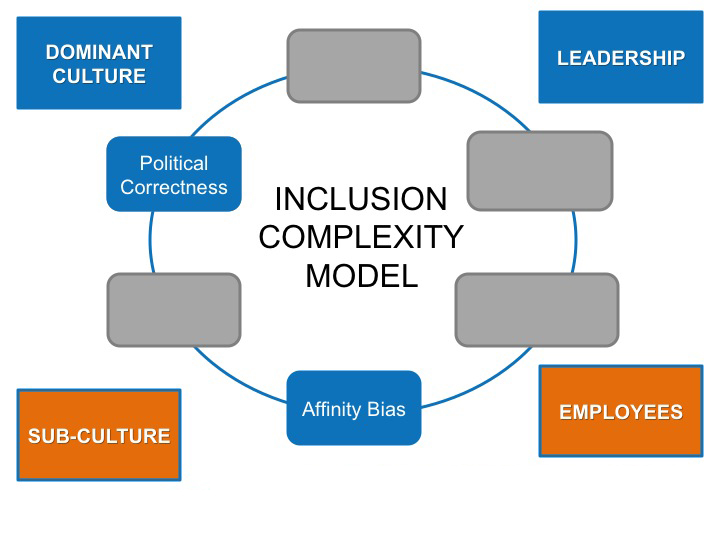
If I were to make a hierarchical list of unconscious biases and their impact on retention and the talent pipeline, “Affinity Bias” would surely be a top contender. It is true that affinity bias is most often defined in the context of the hiring process—when interviewers show a preference for candidates who are similar to themselves—but I would argue that it has much more wide-ranging ramifications.
Understandably, corporate hiring practices are set up to find people who are a “good fit” for the organization, people who will bring value to the team. These requirements cause us to look for candidates who are not only professionally skilled, but are also people we can relate to. However, as corporations seek to recruit and retain diverse candidates, they are turning the spotlight more and more on our natural human tendency towards affinity bias—towards hiring (and promoting) in our own image. To mitigate affinity bias in the hiring process, many corporations have engaged diverse recruitment panels to add different perspectives to the hiring discussion. Some of my clients are removing names from resumes during the first round of the recruitment process to limit initial bias. So why is it that, simultaneously, hallway discussions about reverse discrimination, political correctness, and whether or not we have gone too far with the D & I agenda, continue?
In truth, we all have a natural propensity to want to be around people we can relate to and, if we are honest, have a really hard time contemplating the contrary. If affinity bias means being biased towards “people who make me comfortable” or “people who are like me,” then, surely, somewhere tucked in the recesses of our minds are the shadows of these thoughts—“people who make me uncomfortable” and “people who are not like me.” And, let’s be honest, who in their right mind wants to surround themselves with people who make them uncomfortable?
When we talk about affinity bias in the context of the workplace, the subtext of that conversation implies that we are asking the dominant culture—namely white men—to recognize that we need more diversity. That may be accurate, but it is only one piece of the story. We all have a predisposition towards affinity bias, regardless of our race, culture, gender, or other diversity group membership(s). Affinity bias is not the exclusive right of the dominant culture, and yet there exists an interesting and paradoxical phenomenon in that it is still much more difficult for people from subcultures to hire or promote people in their own image (a subject we will return to in the next article).
Part of the human condition?
Affinity bias shows up in all kinds of subtle ways—often unnoticed—and can impact our choices of whom to trust. For example:
A few weeks ago I had occasion to call a customer service number for assistance with one of my recent purchases. The young woman who answered the phone had a shrill, high-pitched voice, and spoke quickly and incessantly in a monotonous tone, suggesting to me that she was reading from a script. No matter what question I asked her, she repeated the same scripted response. My blood pressure was rising and my patience was wearing thin. No matter what I said, I could not get her to understand what I needed. I finally asked her where she was located, and she said, “The Philippines, but I am very well trained.” I detected some, perhaps understandable, defensiveness in that answer; however, I hesitated to tell her my inner thoughts at that time (being that she was indeed very well trained to read the script, but only the script). Instead I asked to be put through to a supervisor. A few minutes later I heard an American voice: “Hello, this is Mary. How can I help you?” I asked her where she was located, and she said she was in Indiana. My breathing began to normalize, I started to feel more relaxed, and I began my story again—feeling more confident that I was “in good hands” and, this time, would reach a satisfactory resolution.
There are many ways we could unpack this story. We could focus on customer service and discuss the vagaries, and rights and wrongs, of off-shoring; or whether the customer feels heard and the impact of language, accent, tone of voice, and pace of speech on our ability to listen. However, as my main point of focus is on affinity bias, I found myself wondering how often I notice that I am breathing easier around people who are like me. Conversely, I wondered how aware I am of the physiological changes that occur inside me, when I am around people who are different from me, without even realizing they are happening. I venture to suggest that this almost unconscious physiological reaction is impacting trust, inevitably affecting the quality of my relationships, and, perhaps, even having a detrimental effect on the decisions I might make about projects and assignments.
If you accept my premise that affinity bias is part of the human condition and is not going to go away, then the question becomes, “What can be done to ensure that we all behave in an inclusive manner and value diversity?” Results from one of my assessment tools, the Inclusion Skills Measurement (ISM) Profile, suggest that managing conflict across differences and having integrity with our own difference are two areas where we often find the largest skill gap. We are not as comfortable in managing the boundaries across differences as we tell ourselves we are.
Managing affinity bias seems to hold the same challenges as being an inclusive leader in that, in order to breathe more easily with people of difference, we need to get to know them and become comfortable with them. We will never totally rid ourselves of affinity bias, so what we need to do is feel affinity for more people of difference. Perhaps a good way to start would be to pay attention to our reactions and learn to breathe more easily when we are interacting across differences.
The Illusion of Inclusion: Helen Turnbull, PhD

Helen Turnbull, PhD
Dr. Helen Turnbull is the CEO of Human Facets LLC and a world recognized thought leader in global inclusion and diversity. She is a member of the Academy of Management, American Psychological Association, American Sociological Association and American Society for Phenomenology; The Neuro-Science Institute for Leaders and the OD Network. Her latest book is “Blind spots: A conversation with Dr. Turnbull about Unconscious Bias”. In May 2013, she spoke at TEDx on “The Illusion of Inclusion” and has recently developed a new model on the complexity of embedding an inclusive workplace culture.
By Jennifer Thorpe-Moscon

Jennifer Thorpe-Moscon
The number one concern for most companies is finding, developing, and retaining top talent. Even in a recession, when there are more job seekers than there are open positions, the competition for the best and the brightest can remain fierce. Many organizations lament the fact that, while there’s no shortage of applicants for open positions, there aren’t enough who possess the right set of skills.
But what if your company already has access to a pool of talented, motivated workers—workers who just aren’t being given a chance to prove themselves?
A new Catalyst study reveals that, compared to men and non-racially/-ethnically different women, high-potential women who identify as racially or ethnically different from the majority of their coworkers:
- Are less likely to advance to a company’s C-suite or senior executive levels;
- Receive fewer promotions;
- Are less likely to have high-level mentors and may, therefore, be recommended less often for important opportunities;
- Feel more limited than their peers by a lack of access to high-visibility assignments; and
- Are more likely to downsize their aspirations.
When people with identities that diverge from the identity of an organization’s dominant group are made to feel alienated rather than valued, their careers suffer. And the consequences may be equally dire for employers who risk missing out on workers with the right skills but few opportunities to apply them.
Employees who feel like “others” are at least as likely as their majority peers to seek out high-level mentors and sponsors. They are also as likely to attempt to increase their visibility and likelihood of being promoted by asking for crucial assignments. However, they are far less likely to receive access to either.
Why? Senior executives often feel more comfortable with employees who remind them of themselves and, as a result, are more likely to support those employees’ careers. This isn’t always evidence of conscious bias; most people unconsciously favor the familiar. But intentional or not, it’s damaging to those who aren’t “like” the people in charge.
High-potential workers who are in some way different from most of their colleagues often find themselves stuck at their company’s lower levels, wondering if they’ll ever be able to rise. If they become convinced that no matter how hard they try they never will, they may stop trying at all—and start looking for another job.
Anyone can be made to feel like an “other.” Included in our research were white people who worked at organizations where the majority of their colleagues shared a different racial identity. An Asian woman might feel like an “other” if her workgroup consists primarily of Hispanics. One can also feel like an “other” based on nonvisible characteristics, such as sexual orientation.
In an increasingly global world, companies that wish to remain competitive must be responsive to the needs of people with diverse backgrounds and life situations. Organizations in which all employees feel comfortable, respected, and valued foster dedication, diligence, and an eagerness to contribute.
What are some concrete steps you can take to ensure that all of your organization’s employees are given the same opportunities to succeed?
- Establish mechanisms, such as diverse selection and promotion committees, to ensure that those with backgrounds different from a workgroup’s majority are evaluated fairly, based on their performance and potential.
- Encourage senior executives to sponsor colleagues whose identities differ from their own.
- Hold managers accountable for ensuring that all promising employees have equal access to career-accelerating jobs.
- Equip managers to become inclusive leaders by helping them develop a set of behaviors that will elicit the best possible performance from each employee, regardless of his or her background.
Companies should see true inclusion as an exciting opportunity rather than a difficult challenge. The best way to maximize an organization’s effectiveness, and harness the power of each employee’s unique skills and talents, is to ensure that everyone feels comfortable and included at work.
Talented people with “different” perspectives should be valued rather than marginalized for what they bring to the table.
Jennifer Thorpe-Moscon, PhD, serves as research director of panel management for Catalyst. Her primary focus is on developing and expanding Catalyst’s research panels globally, as a part of an effort to extend progress for women and business around the world. She also serves as a resource for participant outreach and analytics.
Founded in 1962, Catalyst is the leading nonprofit organization expanding opportunities for women and business. With offices in the United States, Canada, Europe, India, and Australia—and more than 700 members—Catalyst is the trusted resource for research, information, and advice about women at work. Catalyst annually honors exemplary organizational initiatives that promote women’s advancement with the Catalyst Award.
Prudential provides meaningful opportunities for diverse suppliers to compete for its business.

“Prudential has made a lot of inroads in nontraditional purchasing with law firms. In 2009, Prudential and DuPont approached the National Association of Minority- and Women-Owned Law Firms (NAMWOLF) to launch an Inclusion Initiative to increase the utilization of MWBE law firms by corporate legal departments. And thanks to our law department, since 2006, our percentage of spend with MWBE firms has increased more than tenfold.”
Beth Canning
Supplier Diversity Manager
Prudential embraces diversity and inclusion and sees it as inextricably linked to achieving our aspirations: To be a people leader, business leader, and most admired company. Vendor diversity is a key initiative for the company. The underlying principle is that tapping into vendors who reflect the demographics of our marketplace makes great business sense for everyone—our customers, our vendors, and Prudential.
Our objective is to leverage the unique perspectives and innovative thinking of a diverse group of vendor-partners in a way that enables us to provide increased value to our clients and shareholders. Through this commitment, Prudential has successfully established many key diverse-supplier relationships and made inroads into nontraditional suppliers, such as legal firms, where the company has led an initiative to engage certified minority- and women-owned law firms.
We award contracts for goods and services through a disciplined sourcing process that uses the expertise of skilled procurement and sourcing personnel, as well as cross-functional sourcing teams. We are currently rolling out a management structure based on categories of spend that will allow us to centralize procurement efforts and consistently employ the sourcing process in a responsible, ethical manner in line with Prudential’s values and code of conduct. We expect that this process will broaden opportunities for diverse suppliers and deepen the resulting vendor relationships. Our experience to date has shown an increase in the opportunities being extended to diverse-owned firms and the success of diverse firms in winning business.
Prudential hosts an annual Diverse Supplier Summit, which brings our buyers and key diverse vendors together to focus on topics that deepen the vendors’ understanding of Prudential and enhance the value they provide. The Summit is an opportunity for Prudential to share subject matter expertise in areas that will strengthen each vendor’s ability to meet the requirements of firms like Prudential.
Prudential requires certification for minority- and women-owned firms. More information on Prudential’s vendor diversity initiative is available at www.prudential.com/supplierdiversity. Information on how to do business with Prudential is available at www.prudential.com/procurement.

“The Hartford’s supplier diversity program promotes collaboration, fosters strategic partnerships, and introduces competitive sourcing opportunities that will enhance our mutual growth.”
Robert Pilney, Director of Procurement
As a company that strives to be a place where people can succeed because of their differences, and one with sourcing needs on a wide range of goods and services, The Hartford’s Supplier Diversity program is focused on fostering an open and competitive sourcing environment for all suppliers, regardless of classification.
To further develop strategic and collaborative partnerships with diverse suppliers, The Hartford recently re-launched a portal—available on our website—that allows suppliers to register and certify themselves as diverse suppliers and classify the types of services they provide. This allows The Hartford’s procurement team to easily identify diverse suppliers. The standard classification types used in most industries are the United Nations Standard Products and Services Code (UNSPSC) and the North American Industry Classification System (NAICS).
For several years, The Hartford has been an active advocate for minority business enterprises (MBEs) and a corporate sponsor of the Greater New England Minority Supplier Diversity Council (GNEMSDC). More recently, the company became a corporate partner with The National Gay and Lesbian Chamber of Commerce (NGLCC) and the Women Presidents’ Educational Organization (WPEO). The Hartford’s goal is to be an active advocate within these associations and achieve the following:
- Identification of potential diverse suppliers and partnerships
- Better data to enrich reporting
- Increased branding opportunities and exposure at minority council events
- Broader sales opportunities for The Hartford’s insurance products
While becoming a corporate sponsor is an important first step, to grow its Supplier Diversity program and enhance partnerships with diverse suppliers, the company has several initiatives underway, including these:
- Partnering with the HR Diversity & Inclusion team to communicate to buyers in the company’s business units the benefits of partnering with diverse suppliers
- Establishing Request For Proposal (RFP) protocols that require diverse supplier participation
- Enhancing reporting on Tier II diverse spend
Fostering these diverse supplier relationships reinforces The Hartford’s commitment to ethical business practices, and will ensure support long-term growth and add value to the company. Learn more about our supplier diversity initiative at www.TheHartford.com.
KPMG’s Supplier Diversity program has enabled the company to more than double its expenditures with diverse businesses in a few short years.
By David HW Turner, Chief Financial Officer
David HW Turner
In today’s competitive market, having a diverse supply chain is critical to success.
From a business standpoint, sourcing the highest-quality goods and services for our organization helps us remain competitive and, in some cases, can create a significant advantage. Seeking out diverse companies for the products and services we need ensures that we are assessing the full breadth and depth of potential suppliers. Supporting diverse businesses also benefits our communities and clients—many of whom want to know that they are working with an organization that supports diverse enterprises.
In 2008, KPMG established a Supplier Diversity program that has enabled us to more than double our expenditures with diverse businesses in a few short years. Our efforts are built around a few key strategies:
First, KPMG actively seeks and encourages qualified diverse enterprises to compete for our business. As part of our procurement policy, we aim to ensure that at least one diverse supplier is part of each request-for-proposal process that our organization initiates, and we evaluate them against the same criteria—including cost, quality, and risk—as all other current and potential suppliers.
Second, our organization successfully utilizes the databases of several independent agencies that certify and classify diverse businesses. This helps us to not only find potential suppliers, but to also take advantage of the networking opportunities afforded by these agencies through conferences and other activities to develop relationships with diverse businesses.
Third, the supplier experience is enhanced through our use of technologies such as procure-to-pay systems, which streamline ordering, tracking, and payment procedures. We also conduct regular performance reviews with our top suppliers to provide them with feedback and help them better understand our needs and expectations.
Like our clients, we also track our “second-tier supplier diversity spend,” which is the amount our vendors and suppliers spend with diverse companies.
At KPMG, diversity and inclusion are fundamental to our strategy, structure, and governance. And they’re woven into everything we do—including the way we approach our supplier relationships. We’ve made great progress in supporting and encouraging diverse businesses through our Supplier Diversity program. Building our network of diverse suppliers will continue to be an important area of focus for our organization.
Internal Partnerships Help Drive Success

“At KPMG, we have worked to operationalize diversity throughout our organization, so that it is part of our strategy, structure, and governance. Diversity is now woven into everything we do, from recruiting and professional development to the way we serve our clients and from our supplier relationships to our commitment to youth, education, and workforce readiness.”
John B. Veihmeyer, Chairman and CEO
A successful Supplier Diversity program requires a solid commitment from leadership, a focused strategy, and the support of strong internal partnerships. It’s what we have—and will continue to drive forward—at KPMG.
Our program provides qualified diverse businesses much more than the opportunity to compete for KPMG’s business. We also actively encourage our employees to become involved with these companies—as volunteer board members, committee members, and site visitors.
For example, KPMG is a founding partner of the U.S. Business Leadership Network’s (USBLN’s) Disability Supplier Diversity Program, so our employees have an opportunity to volunteer to help certify businesses as disabled owned, making the businesses eligible to submit proposals to, and win work with, KPMG. In fact, volunteer members of KPMG’s Abilities in Motion network have been a driving force in developing and implementing this certification program. As a result of their work, KPMG recently made its first purchase from one of these certified disabled-owned suppliers.
KPMG is proud to support supplier diversity advocacy organizations like USBLN, the Women’s Business Enterprise National Council (WBENC), National Minority Supplier Development Council (NMSDC), and National Gay & Lesbian Chamber of Commerce (NGLCC). As a national corporate partner and active member of these organizations, KPMG makes annual contributions in support of their events and respective missions, and provides volunteer support.
We’re proud of the success we are experiencing in this area, not only because it reaffirms our commitment to inclusion, but also because it provides our employees with opportunities to get involved in diversity in very tangible, meaningful ways.

Mahogane D. Reed
Summer Associate
McGlinchey Stafford Awards Diversity Fellowship to First-Year Law Student Mahogane D. Reed
National law firm McGlinchey Stafford recently announced that it has awarded Mahogane D. Reed the 2014 1L Diversity Fellowship.
A first-year law student at Louisiana State University’s Paul M. Hebert Law Center, Reed is a member of the Black Law Student Association and the Public Interest Law Society. She is also a Faculty Scholarship recipient, and participated in the Flory Trial Competition. Ms. Reed has also worked as a legal advocate with the Iris Domestic Violence Center. Before entering the law program, Ms. Reed was on the Dean’s list at LSU, a National Black Scholar, and a member of the National Society of Collegiate Scholars.
The 2014 Diversity Fellowship includes a six-week paid summer associate position in the firm’s Baton Rouge office, a $5,000 scholarship, and formal mentoring by McGlinchey Stafford attorneys throughout the recipient’s law school career. Ms. Reed will also participate in the Leadership Council on Legal Diversity (LCLD) Scholars Retreat, which brings together diverse law students from around the country to learn about interview skills, transitioning from law school into practice, the state of diversity in the legal profession, and the value of networking. Participants will also have the opportunity to build peer relationships and interact with general counsel and managing partners from LCLD member organizations nationwide.
Awarded each year to a first-year law student who demonstrates high academic achievement and a dedication to the law, the McGlinchey Stafford 1L Diversity Fellowship represents the firm’s active commitment to a diverse workplace, and the inclusion and retention of talented professionals.
“We are thrilled to welcome Mahogane as this year’s Diversity Scholar,” said Mindy Brickman, chief diversity officer at McGlinchey Stafford. “We are excited to mentor and support her as she progresses in her legal career.”

Carla Rutigliano
Senior Vice President & Chief of Staff
New York Life Elects Carla Rutigliano Senior Vice President and Chief of Staff
New York Life has announced the election of Carla Rutigliano to the position senior vice president and chief of staff to Chairman and CEO Ted Mathas.
In her role, Rutigliano will ensure the oversight and coordination of key strategic initiatives in the Office of the Chairman and CEO, and provides a link between the Chairman’s office and all other business areas within the company as well as with external organizations. In addition to these responsibilities, she provides senior executive oversight to the New York Life Foundation.
Rutigliano joined New York Life in 2001 in the Office of Governmental Affairs where she represented the company in both state legislative and regulatory matters. She began reporting to Mr. Mathas in 2006 as he became chief operating officer and vice chairman of the board that year, then CEO in 2008. Prior to New York Life, she was an assistant attorney general in the New York State Office of the Attorney General, an assistant corporation counsel for the City of Syracuse Office of the Corporation Counsel, and an intern and staffer for New York State Assemblyman Paul Harenberg. She holds a J.D. from Albany Law School at Union University and a B.A. in Political Science from SUNY Albany. Ms. Rutigliano grew up in East Islip, N.Y., and currently resides in Dix Hills, N.Y., with her husband and their two children.
Teach For America launches a new initiative to bring teachers from across the AAPI spectrum into the classroom to help AAPI students deal with the realities they face every day.
By Teresa Fausey

Sarah Ha, Managing Director of TFA’s Asian American and Pacific Islander Initiative
When it comes to education—and society in general—the model minority myth often applied to all Asian Americans, like all myths that lump unique individuals into a homogeneous group, does more harm than good. In case you’re unfamiliar with the Myth of the Model Minority, it goes something like this: All Asians are super smart (especially in math and science), super hardworking (but aren’t looking to lead), don’t want to rock the boat, and don’t need any help, because they’re already doing great.
Of course, the Myth has a lot of problems.
The Asian American and Pacific Islander (AAPI) “group” is actually made up of 48 different ethnic groups that speak more than 300 languages. And unlike many diverse groups in America, 69 percent of AAPIs are foreign born.* Also, many AAPI students are unfamiliar with the US and its culture, have limited English language skills, may face bullying and discrimination, and live in poverty. Serious challenges in the classroom—and in life. Then, there’s the greatest Myth buster of all—regardless of their ethnicity, every single one of them is a distinct individual—with different abilities and talents, different dreams and goals, and different life experiences. It turns out there is no Model Minority…no Myth. Just children, who want and need to learn.
Showing Initiative
Teach For America (TFA), a nonprofit organization that helps eliminate educational inequities, trains would-be teachers to understand and meet the needs of America’s most underserved students. In return, corps members agree to teach for two years a high-need location across the US.
Always looking for new ways to serve students, TFA recently launched its Asian American and Pacific Islander Initiative. By recruiting, training, and placing AAPI teachers in underserved schools, the organization is confident that the challenges AAPI children face can be met more effectively.
To help ensure the success of the new Initiative, TFA has hired a professional with a solid understanding of the issues AAPIs may face. He name is Sarah Ha, and she is the first, and current, managing director of TFA’s Asian American and Pacific Islander Initiative. Prior to taking on this role with TFA, Sarah, a graduate of University of California, Los Angeles, worked for the Asian & Pacific Islander American Scholarship Fund.
Sarah explains why she is so committed to supporting the AAPI community: “Many of the social realities our AAPI students deal with every day are often overlooked, because there is an acceptance of the persistent stereotype that says AAPIs are not in need of any attention, or that they come from well-to-do backgrounds. When I think about that, it makes me consider my own background, recognizing that my own personal narrative is not anything like the Model Minority Myth.
“I remember growing up feeling pretty inadequate—feeling that I fell short of this perception. I think from a young age, it made me think about my identity, and what that meant in connection to the larger AAPI community,” she says. “I had to find a way to translate my own personal experience—coming from a humble background, having been an English language learner, being the first in my family to go to college, and having to achieve beyond my limited social and cultural capital—into a public issue and advocate on behalf of the AAPI community, so that no student gets lost in the system because of a mistaken perception.”
Sarah’s mission is to find AAPI leaders who will bring experience, talent, and energy to the classroom, as well as an understanding of the challenges these students face. Studies indicate that teachers who share similar racial, ethnic, or economic backgrounds with their students can have a significant impact on student engagement and success. Sarah will soon embark on a “listening tour” that will enable her to visit many communities and learn about their specific needs from the people who live there.
To build a pipeline of talented AAPI leaders, both inside and outside the classroom, TFA has also launched an Underclassmen Development Initiative intended to foster healthy identity development among AAPI college students. The Initiative’s goal is to encourage the students to retain their unique identities and cultural values, while developing new and critical skills that will make them effective leaders in the AAPI community and beyond.
Amanda Tran (Bay Area Corps ’12)

Amanda Tran
Growing up in Columbus, Indiana—a small, mostly white community—Amanda Tran says she felt as if she “stuck out.” When she moved to Los Angeles to attend the University of Southern California (USC), she discovered a different world—one that helped her get in touch with her identity.
“I don’t think I really understood my heritage,” says Amanda, whose parents came to the US after the Viet Nam War, “until I surrounded myself with other children of Asian immigrants and heard their stories.”
Amanda soon joined an organization run by USC undergrads called Troy Camp that raises funds to send local children to a weeklong camp each spring, mentors and tutors those children all year long, and sponsors outings. She became a volunteer and camp counselor.
While looking for more ways to work with kids, she heard about Teach For America. “I went to the Teach For America website to research it…and an hour later, I applied. It was the only place I applied!” She was accepted and never looked back. Now Amanda is teaching preschoolers, which she loves. And after finishing her TFA two-year commitment this spring, she will continue to teach. “I’ve already applied for a position with a new school that’s opening in Los Angeles. I really want to stay in the classroom.”
*Source: US Census Bureau, Population Division, National Commission on Asian American and Pacific Islander Research in Education (2011). The Relevance of Asian Americans & Pacific Islanders in the College Completion Agenda, New York NY.

Balwant Grewal
Plant Manager Major, Bay Valley, United States Postal Service
What You’d Be Surprised to Know about Me
I can speak four languages.
My Greatest Strength
Everything starts with a value system. One must connect to one’s personal values. Once you have that as a foundation, your mission and economic objectives become clearer.
Who Inspires Me
I have been fortunate to have very good mentors during my entire career who helped guide me.
And if I had to name one very good mentor, it would have to be my father. He gave me a foundation of hard work, fairness, and resilience.
The Model Minority Myth
I think a very big myth is that in America we have “minorities.” We are a melting pot of diverse people who bring collective strengths to America.
Our Most Critical Issue
Critical issues include:
- Adapting Asian/Pacific-American culture to the business culture.
- APAs have been referred to as a model minority, but this community also faces a number of stereotypes, including that we are all quiet, hardworking, family oriented, good at math, passive, and nonconfrontational.
Asians/Pacific Islanders often do not self-promote, which can sometimes prevent them from moving into the upper tiers of organizations.
Lessons I’ve Learned
I have learned a number of important lessons:
- Challenge yourself and believe in yourself.
- Don’t be affected by negativity
- Surround yourself with people who will provide constructive criticism and help you see what you may not see, which will help point you in the right directions.
My Best Career Advice
- Be trustworthy.
- Let your work speak for you.
- Embrace change, because it will happen.
- Always raise your performance standards, and you will make a difference!